

I spent most of my 40s skipping sunscreen. I had my reasons. Every formula I tried left a white cast I could see from across the room, or it sat on top of my skin like a film of cooking oil, or it balled up under my foundation before I even left the house. I told myself moisturizer with SPF was good enough. It wasn't, and my skin has the sun spots to prove it.
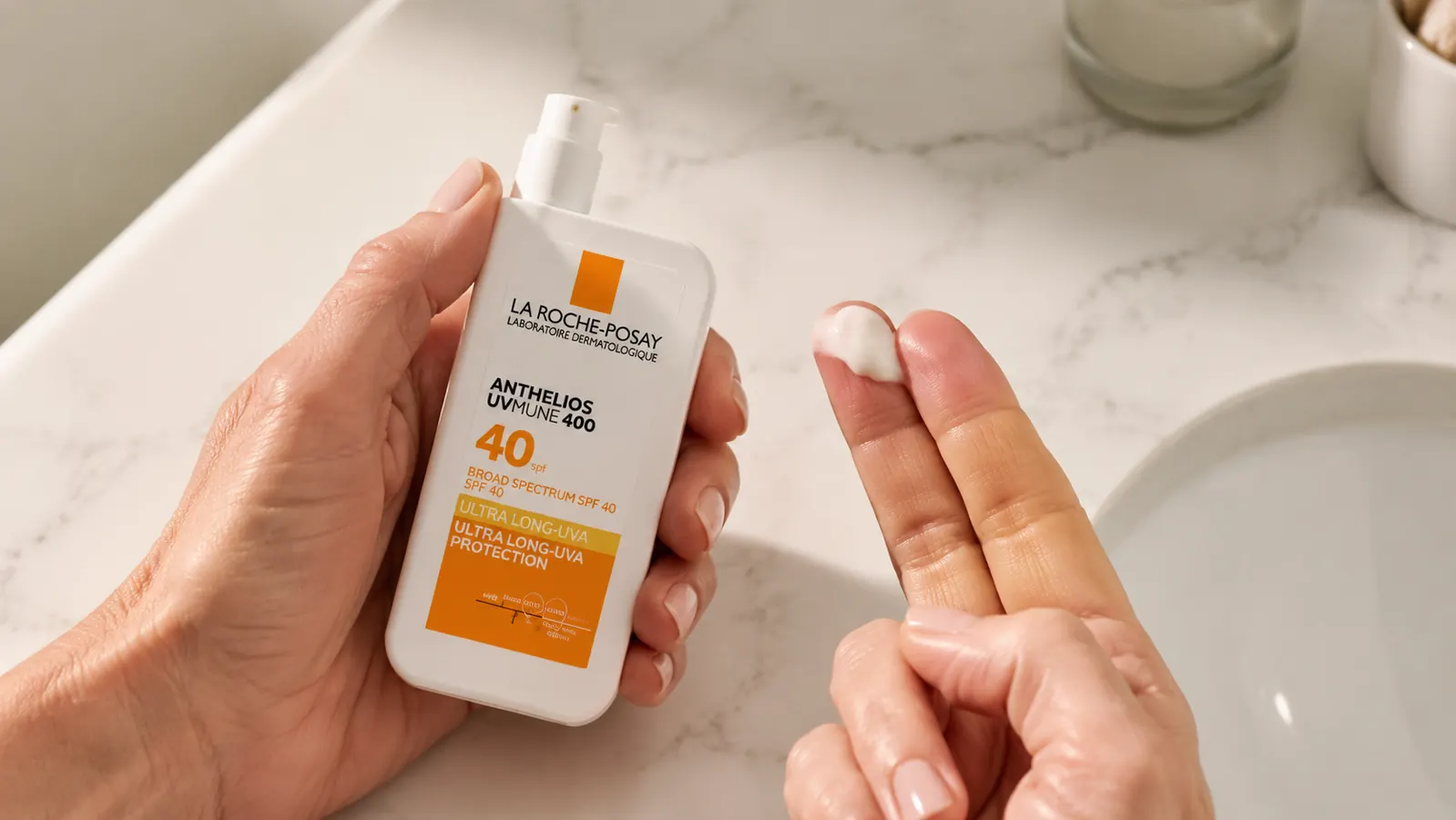
Here is the thing nobody tells you clearly: those problems are not sunscreen problems. They are the wrong-sunscreen problems. Once I switched to a formula designed for facial daily wear, and once I learned the right way to apply it, sunscreen stopped being a step I dreaded and became the one step I never skip. I wear La Roche-Posay Anthelios SPF 40 Ultra-Light Fluid now, every single morning, and it does not look like anything on my face. That is the goal.
If white cast and grease have kept you off sunscreen, this is the formula that fixes both.
La Roche-Posay Anthelios SPF 40 Ultra-Light Fluid has over 31,000 reviews on Amazon. It is the sunscreen dermatologists recommend most often for daily facial wear on sensitive skin. Fluid texture, zero white cast, no greasy film.
Amazon Check Today's Price on Amazon →Why Most Women Quit Sunscreen (And Why None of Those Reasons Have to Apply to You)
Before I walk you through the steps, it is worth naming the specific things that make people quit. White cast comes almost entirely from physical sunscreen filters like zinc oxide and titanium dioxide. These ingredients sit on the surface of the skin and physically scatter UV rays. They work well, but they are opaque, and on medium to deeper skin tones they can look downright chalky. If you have been burned by a physical sunscreen, you need a chemical or hybrid formula instead.
Greasiness is usually a texture problem. Sunscreens formulated for body use tend to be thick and occlusive because body skin needs more barrier protection. Applying a body sunscreen to your face is like slathering on body lotion instead of a face cream. The oils and waxes that keep body sunscreen spread-able make it unsuitable for facial daily wear. A fluid or gel sunscreen formulated specifically for the face will behave completely differently.
Pilling under foundation is a layering problem. Certain sunscreen ingredients, particularly some silicone-heavy formulas, create a surface that other products cannot adhere to. The fix is usually as simple as letting your sunscreen dry down for two full minutes before applying foundation. Some formulas also pill when overapplied. I will cover the right amount in Step 2.
Step 1: Choose the Right Sunscreen Formula for Your Face
This is where the whole equation starts. Not every sunscreen is made for daily facial wear, and choosing wrong is the reason most people give up. For everyday use, you want a sunscreen that is labeled broad spectrum (covers both UVA and UVB rays), SPF 30 or higher, and specifically formulated for face or daily wear. A fluid or gel texture almost always beats a cream for no-white-cast results.
La Roche-Posay Anthelios SPF 40 Ultra-Light Fluid checks every one of those boxes. It uses a blend of chemical UV filters, which means no physical blockers, no white cast. The fluid texture absorbs quickly and leaves a matte-leaning finish that works well under makeup. La Roche-Posay is a French pharmaceutical brand that started in thermal spa dermatology, and their sunscreen line is formulated with sensitive skin as the baseline, not an afterthought.
If you have very oily skin, look for formulas labeled oil-free or dry finish. If your skin runs dry, a formula with a small amount of glycerin or hyaluronic acid will layer more comfortably. The Anthelios fluid works across most skin types, which is part of why it has accumulated 31,000-plus Amazon reviews.
Step 2: Apply the Right Amount (Most People Use Half of What They Need)
SPF ratings are tested at a specific application thickness: 2 milligrams per square centimeter of skin. In practice, for the average adult face and neck, that works out to roughly a quarter teaspoon, or about a nickel-sized amount for the face alone. Most people apply somewhere between a quarter and a third of that, which means the SPF protection they are actually getting is far lower than what the label says.
With a fluid sunscreen like the Anthelios, a nickel-sized amount spreads easily and does not look heavy. Start at the center of your face and blend outward toward your hairline and jaw. Do not forget the neck and the tops of your ears. If you are going to be outdoors, add a thin layer to your hands as well. Sunscreen should feel like nothing once it settles. If it feels heavy, you have either applied too much at once or the formula is wrong for your skin.
Step 3: Layer It in the Right Order in Your Morning Routine
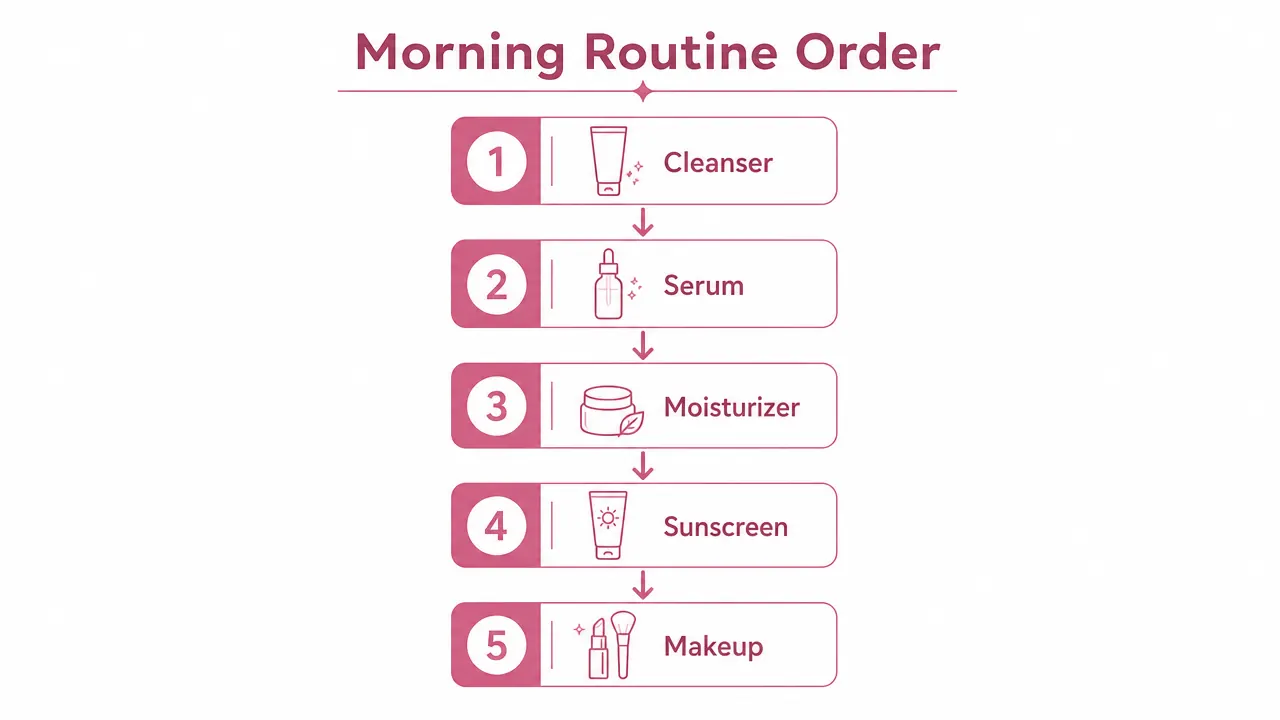
Sunscreen is always the last skincare step, applied after moisturizer and before makeup. The logic is simple: sunscreen needs to sit on the outermost layer of your skin to do its job. If you apply moisturizer on top of sunscreen, you dilute the UV filters and create a barrier between them and the UV rays you are trying to block.
The order I use every morning: cleanser, toner or vitamin C serum if I am using one, moisturizer, then sunscreen. I wait about 60 seconds between my moisturizer and my sunscreen to let the moisturizer absorb. Then I apply the Anthelios, let it settle for two minutes, and apply makeup if I am wearing any. That two-minute wait is the single change that eliminated pilling for me.
One note on moisturizer with SPF: it counts as sunscreen only if you apply the full quarter-teaspoon amount. Most people use a fraction of that for their moisturizer, which drops the real-world SPF to well below the number on the label. Using a dedicated sunscreen on top of a lighter moisturizer is more reliable than trying to double-duty a moisturizer-SPF hybrid.
Step 4: Reapply During the Day Without Destroying Your Makeup
Reapplication is the part of the sunscreen conversation that most people just quietly ignore. Technically, you should reapply every two hours when outdoors in direct sun, or immediately after swimming or heavy sweating. For most women in everyday life, that means reapplying once at midday if you go outside for lunch or run errands.
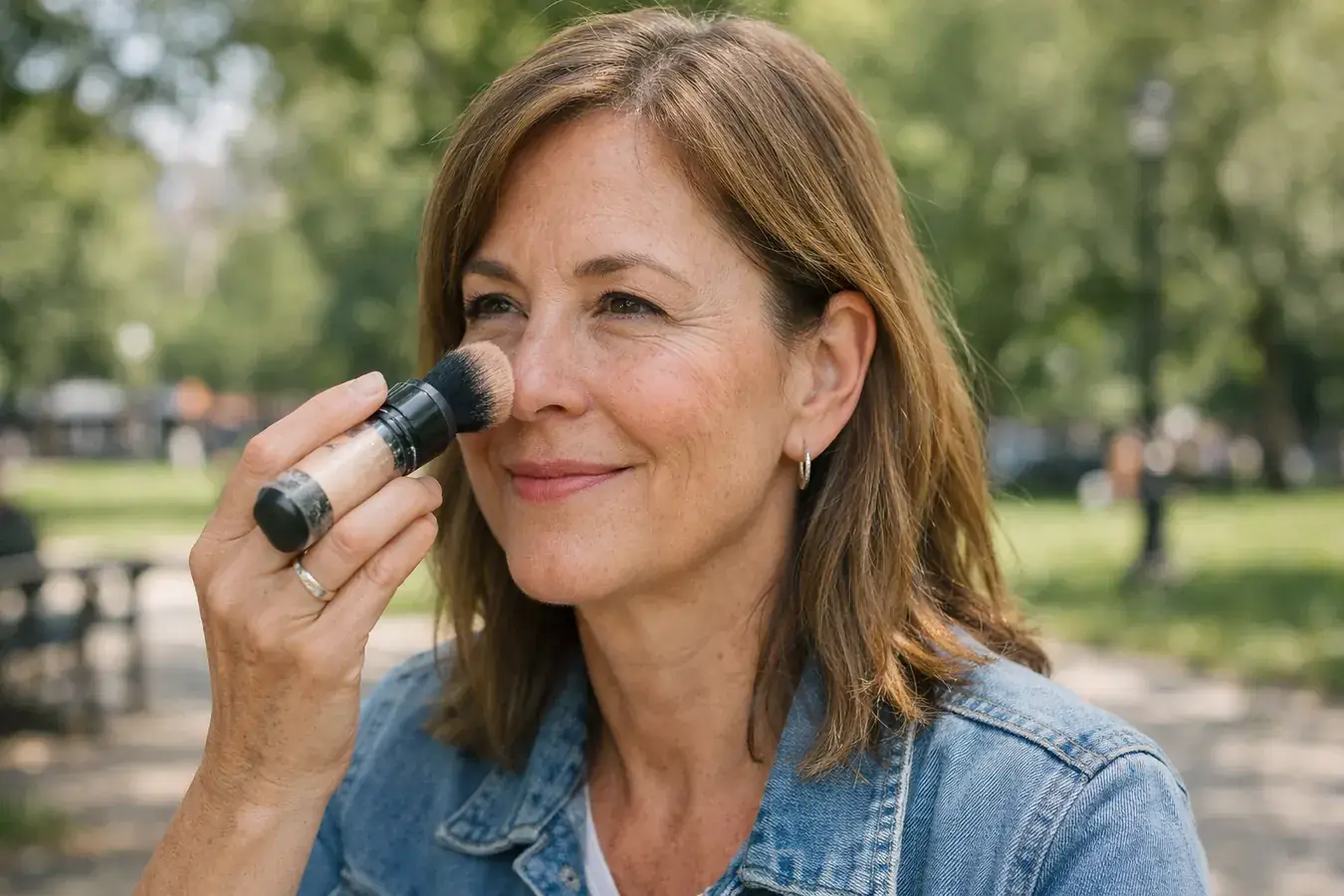
The practical problem is obvious: you have makeup on. Applying a fluid sunscreen over foundation is a mess. This is where powder SPF products earn their place. An SPF setting powder or a brush-on powder sunscreen lets you dust a protective layer over your makeup without disturbing it. These products will not replace your morning application, but they handle the midday top-up cleanly. Look for ones with SPF 30 or higher and a broad-spectrum claim.
If you are not wearing makeup, midday reapplication with your regular fluid sunscreen is simple. Blot any oil with a tissue first, then apply a smaller amount (about half your morning dose) and blend. The Anthelios fluid layers without looking cakey because the texture is genuinely light.
The two-minute wait between sunscreen and foundation is the one change that eliminated pilling for me. That is it. Two minutes of letting the formula settle, and the problem I thought was unsolvable just stopped.
Step 5: Build the Habit So It Sticks
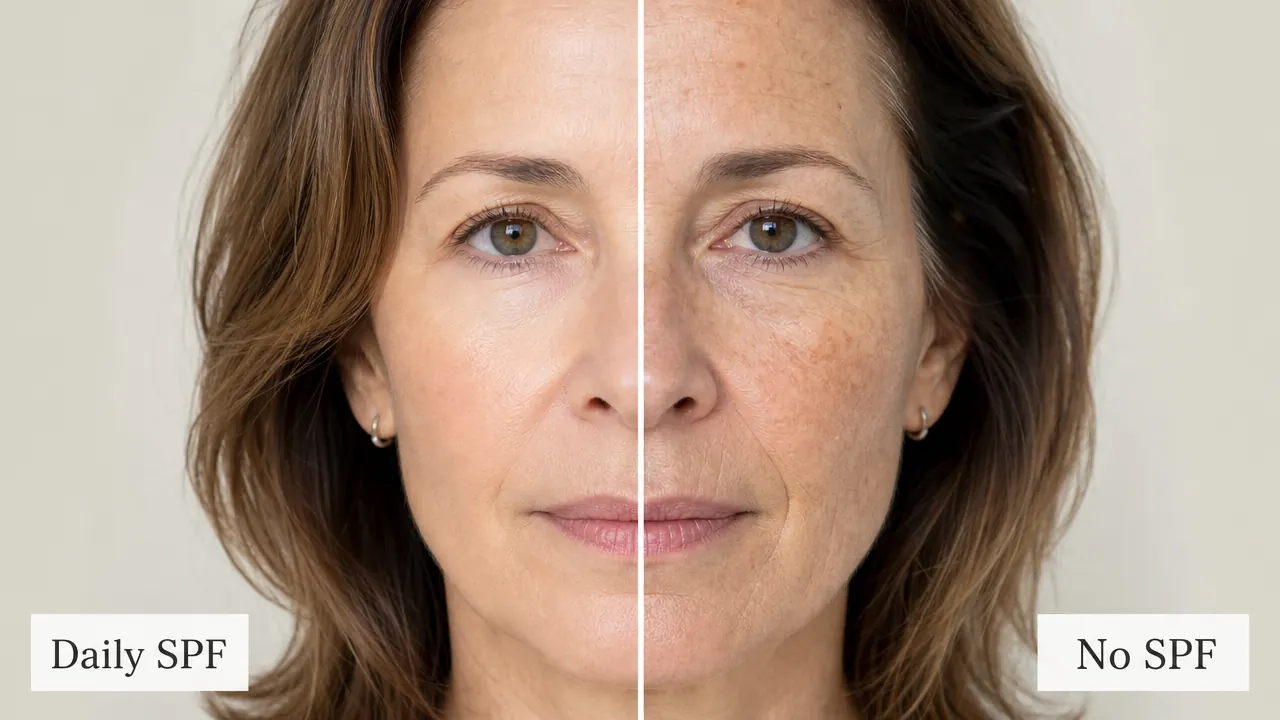
The best sunscreen is the one you actually use every day, including cloudy days and work-from-home days. UVA rays, the ones responsible for skin aging and melanoma, pass through clouds and glass. Sitting near a window all day counts as UV exposure. The dermatologists I have interviewed over the years are consistent on this point: daily sunscreen on every exposed day, regardless of the weather.
Making it a habit means removing friction. I keep my Anthelios next to my moisturizer so picking it up is automatic. I do not put it in a cabinet or a different drawer. It is the last thing I grab before I leave the bathroom. Some women find it easier to apply sunscreen as the first thing after washing their face, before any other product, which sidesteps the layering question entirely if they are skipping moisturizer on that day.
One habit I found helpful in the beginning: apply sunscreen before you get dressed. That way there is no risk of forgetting it because you got distracted choosing an outfit. The order does not have to match mine. What matters is that sunscreen happens before you walk out the door.
What Else Helps
A few supporting moves that make daily sunscreen wear easier and more effective. First, keep a travel-size bottle in your bag or car for days when you reapply away from home. The Anthelios comes in a pump bottle that does not leak, which makes it practical to carry. Second, if you are new to chemical sunscreens and have sensitive skin, do a patch test on your inner arm for two days before wearing on your face daily. Chemical filters are generally well tolerated, but reactions are possible.
Third, pair your daily sunscreen habit with a vitamin C serum in the morning. Vitamin C and SPF are synergistic. The antioxidants in vitamin C serum neutralize free radicals that UV exposure generates, and SPF physically blocks the UV from reaching the skin in the first place. Used together, morning after morning, they are the most evidence-backed anti-aging combination you can build a routine around.
If you want to read a more detailed look at how the Anthelios performs over four months of daily use on sensitive skin, including whether it causes breakouts, my full review is worth a look: see the La Roche-Posay Anthelios SPF 40 review. And if you want the unfiltered take on value and real-world performance, the La Roche-Posay Anthelios SPF 40 honest review covers what nobody else mentions.
Ready to make sunscreen a daily habit? Start with the formula that makes it easy.
La Roche-Posay Anthelios SPF 40 Ultra-Light Fluid is the sunscreen that converted me from a daily skipper to a daily wearer. No white cast. No grease. Goes under makeup without pilling. Check the current price and see what 31,000 reviewers have to say.
Amazon Check Today's Price on Amazon →