

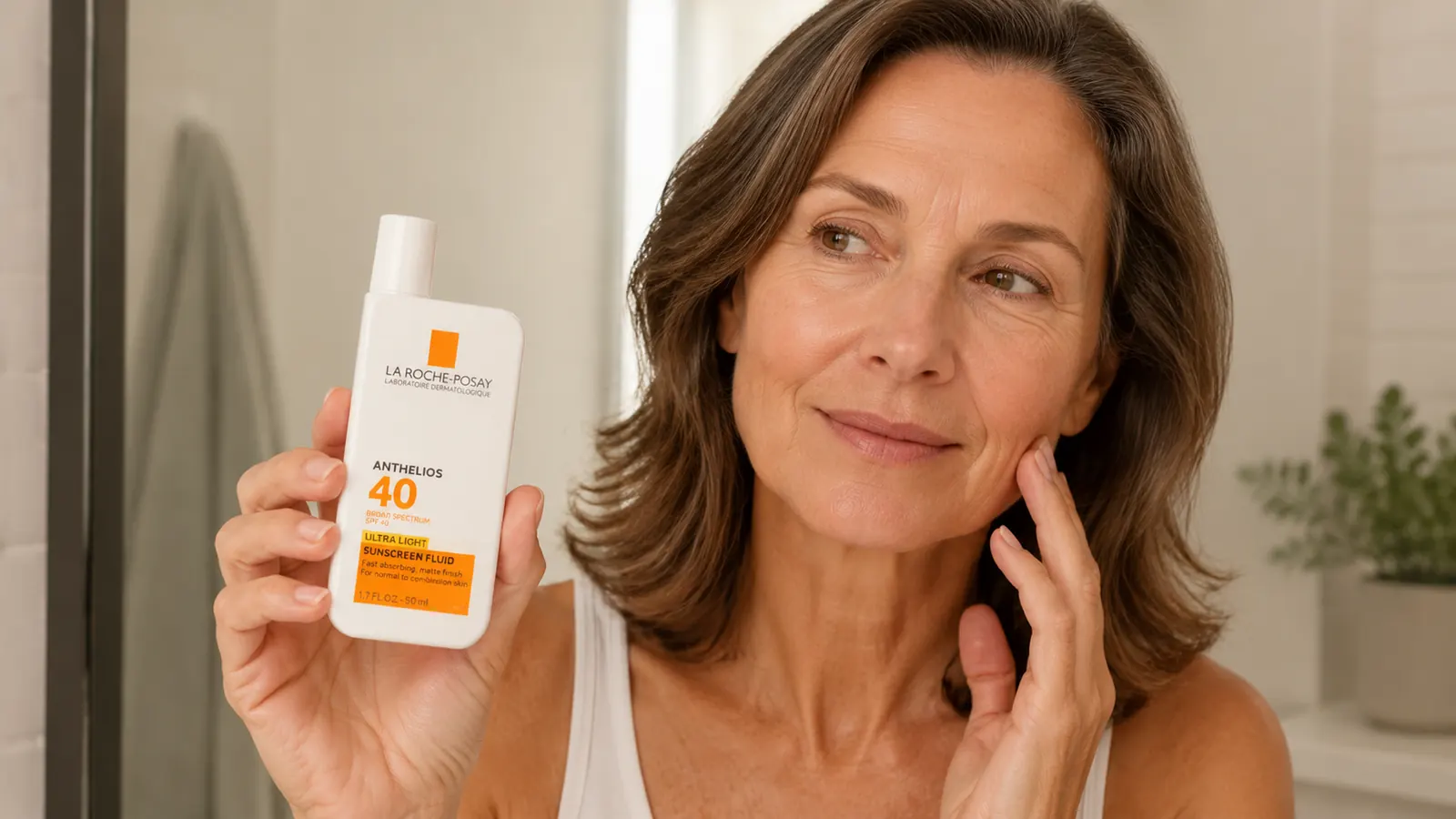
I spent years layering on retinols, peptides, and vitamin C serums while being pretty casual about sunscreen. A dermatologist finally sat me down and said something I should have heard decades earlier: UV exposure drives 80 to 90 percent of visible skin aging. Everything else I was doing, all those serums, was partly chasing damage I was allowing to accumulate every single morning I walked outside without broad-spectrum SPF. That conversation changed my routine permanently. These days, the La Roche-Posay Anthelios SPF 40 Ultra-Light Fluid goes on before anything else, and it stays there.
If you are reading this because you know you should wear sunscreen but you keep skipping it, I put together the ten reasons that finally convinced me. No jargon, no scare tactics. Just the honest case for why daily SPF is the highest-return skincare investment you can make.
Your serums work harder when UV damage is not undoing them overnight.
La Roche-Posay Anthelios SPF 40 Ultra-Light Fluid is the sunscreen that finally made daily wear easy. Non-greasy, no white cast, dermatologist-tested for sensitive skin. Over 31,000 Amazon reviews.
Amazon Check Today's Price on Amazon →UV radiation is responsible for up to 90 percent of visible skin aging
A study published in Clinical, Cosmetic and Investigational Dermatology found that photoaging accounts for the vast majority of wrinkles, fine lines, and uneven texture most people attribute to simply getting older. The breakdown of collagen and elastin caused by daily sun exposure, not the years themselves, is what makes skin look aged. Daily broad-spectrum sunscreen with SPF 40 or higher is the most direct way to slow that process. Every other anti-aging step works downstream of this one.
It blocks both types of UV rays, not just the ones that cause sunburn
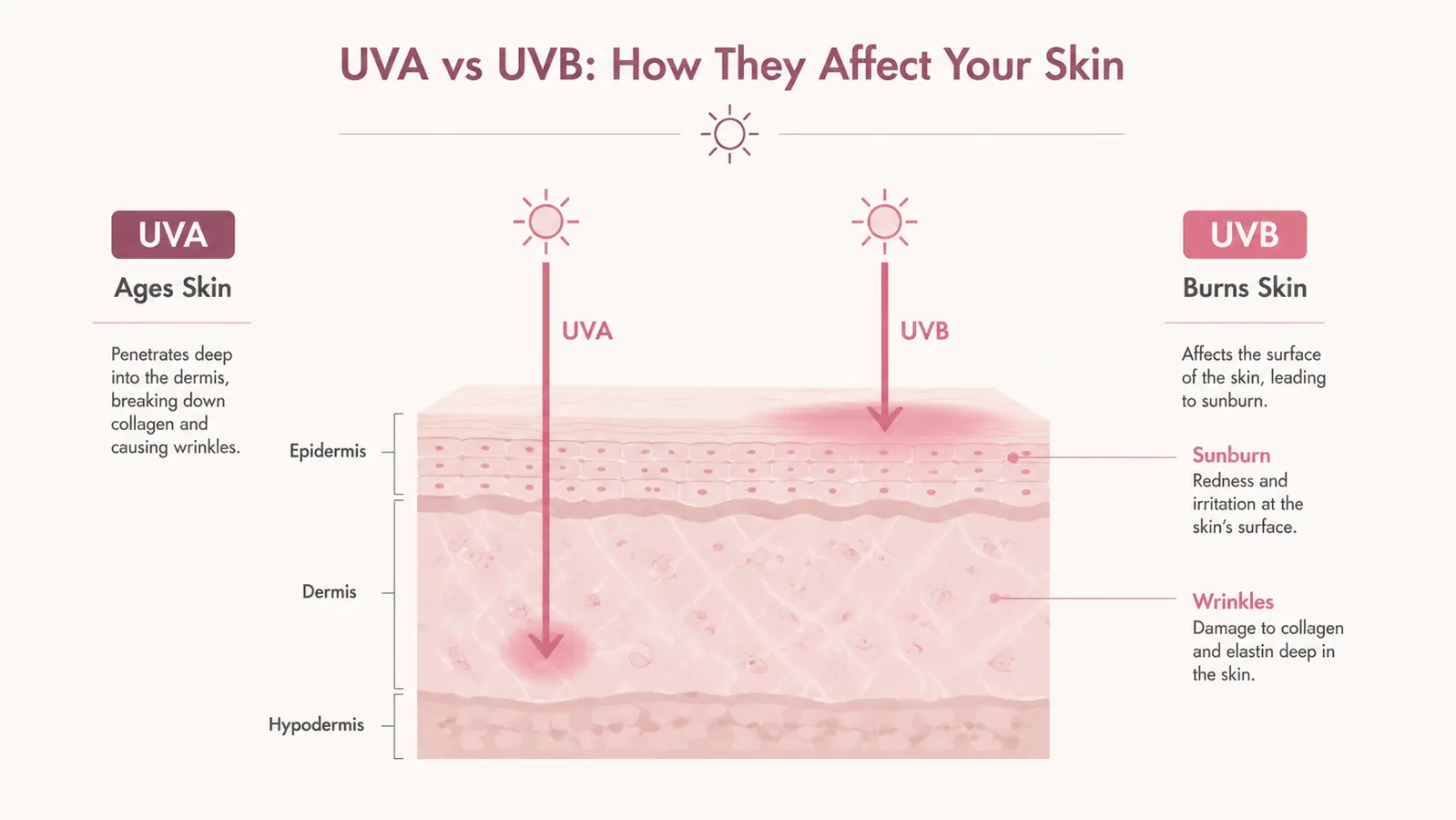
Most people think sunscreen is about avoiding a burn. But UVB rays, the ones that cause burning, are just one part of the problem. UVA rays penetrate deeper into the dermis and break down collagen, cause dark spots, and accelerate skin laxity year-round, even on cloudy days, even through windows. Broad-spectrum SPF 40 protection blocks both. If your sunscreen only says SPF on the label without specifying broad-spectrum, it may not be doing the job you think it is.
It prevents new dark spots from forming, which is easier than fading old ones
Post-acne marks, hormonal melasma, and age spots all share one enemy: UV exposure. Even a few minutes of unprotected sun contact can darken existing hyperpigmentation and trigger new melanin production. Every vitamin C serum and brightening treatment you use to fade spots is fighting an uphill battle if you're not blocking the UV that creates them. Daily sunscreen turns a slow fade into an actual result.
The protection adds up even on short-exposure days
A morning commute, a quick errand run, a walk to grab lunch. On their own, none of these feel like sun exposure worth worrying about. But cumulative UV damage builds up exactly like compound interest, quietly and relentlessly. Dermatologists call this incidental exposure, and over a decade it contributes more to visible aging than any single beach vacation. Reaching for sunscreen every single morning, whether you plan to be outside or not, is the habit that changes the math.
It lets your expensive skincare ingredients actually do their job
Retinol, vitamin C serum, niacinamide, peptides. These ingredients all have solid evidence behind them, but they work by stimulating repair and reducing oxidative stress. When you apply them in the morning and skip SPF, UV exposure generates more free radicals and oxidative damage than those ingredients can neutralize. Sunscreen in the morning is not just protection; it is what allows everything else in your routine to deliver on its promise.
Everything else I was doing, all those serums, was partly chasing damage I was allowing to accumulate every morning I walked outside without SPF.
Modern formulas feel like nothing on your skin
The greasy, chalky sunscreens of the 1990s are not what is sitting on shelves today. The Anthelios Ultra-Light Fluid in particular has a near-weightless texture that sinks in without residue, does not feel heavy under makeup, and does not turn grey on deeper skin tones. If a bad sunscreen experience years ago turned you off from daily use, it is worth giving a newer formula a try. The barrier to actually wearing it has never been lower.
It reduces skin cancer risk, which is worth saying plainly
This one does not need sophisticated framing. Skin cancer is the most common cancer diagnosis in the United States, and UV exposure is its primary driver. The American Academy of Dermatology reports that regular daily broad-spectrum sunscreen use can significantly reduce the risk of squamous cell carcinoma and melanoma. Anti-aging is the entry point for many of us, but the longer game is keeping your skin healthy enough to enjoy for another thirty years.

It is the one step every dermatologist agrees on
Spend any time reading skincare advice and you will find real disagreement: vitamin C or niacinamide first? Retinol every night or three times a week? Toner necessary or not? On sunscreen, there is no debate. Every board-certified dermatologist, every evidence-based skincare researcher, every clinical study on photoaging arrives at the same conclusion: daily broad-spectrum SPF 30 or higher is the single most impactful thing you can do for your skin's long-term health. That kind of consensus is rare.
The anti-aging results are visible and measurable
A landmark 2013 randomized controlled trial published in the Annals of Internal Medicine tracked 900 adults in Australia over four and a half years. The group that used sunscreen daily showed no detectable increase in skin aging scores compared to their baseline. The group that used it only occasionally aged measurably. This was not a before-and-after photo marketing study. It was a peer-reviewed clinical trial with objective scoring. Daily sunscreen works, and the proof is solid.
It costs less per use than any other anti-aging product you own
A bottle of the La Roche-Posay Anthelios SPF 40 Ultra-Light Fluid with daily facial use typically lasts two to three months, working out to under a dollar a day. Compare that to a good retinol serum or a peptide cream at higher price points. Those products have value, but none of them has a better return-on-investment than sunscreen. If your budget forces you to choose just one morning skincare step, SPF 40 is the clear answer.
What I Would Skip Instead
If a tighter budget means something has to go, I would reach for the trendy extras before I touched the SPF. Sheet masks, expensive toners, multi-step misting routines: these are pleasant, but none of them is doing the structural work that broad-spectrum protection does every single day. Read my full breakdown in the La Roche-Posay Anthelios SPF 40 review if you want detail on how it performs across four months of daily wear. And if you have been avoiding daily sunscreen because of white cast or greasy residue, the guide to wearing sunscreen without white cast walks through the techniques that actually solve it.
If your budget forces you to choose just one morning skincare step, broad-spectrum SPF 40 is the clear answer. Nothing else comes close on evidence or return on investment.
The sunscreen that finally made daily SPF easy for sensitive skin.
La Roche-Posay Anthelios SPF 40 Ultra-Light Fluid: broad-spectrum UVA/UVB protection, oil-free formula, no white cast, tested on sensitive and allergy-prone skin. The most-reviewed dermatologist-recommended sunscreen on Amazon.
Amazon Check Today's Price on Amazon →