
For most of my adult life I skipped sunscreen every single day. Not because I did not know better. I knew. It was just that every formula I tried left me looking like I had applied a thin coat of candle wax to my face. Pilling under foundation, white cast on my neck, a faint greasy sheen by 10 a.m. My skin is sensitive, leans toward redness, and revolts against heavy occlusive formulas. So sunscreen fell off the routine, and I told myself I would sort it out later. Later turned out to be four months ago, when a dermatologist pointed at some sun damage on my cheekbones and said, very plainly, "You need to start." I picked up La Roche-Posay Anthelios SPF 40 Ultra-Light Fluid that same afternoon and have worn it every single day since. Here is my honest account of what happened.
The Quick Verdict
A genuinely lightweight broad-spectrum sunscreen that sensitive skin can wear daily without breakouts or white cast. The finish is not perfectly matte, but it is close enough that most women will stop noticing it within a week.
Amazon Check Today's Price →If your skin revolts against most sunscreens, this is the one dermatologists keep recommending, and now you know why.
La Roche-Posay Anthelios SPF 40 Ultra-Light Fluid. 31,000+ Amazon reviews, 4.5-star rating, developed for reactive and post-procedure skin.
Amazon Check Today's Price on Amazon →How I Have Used It
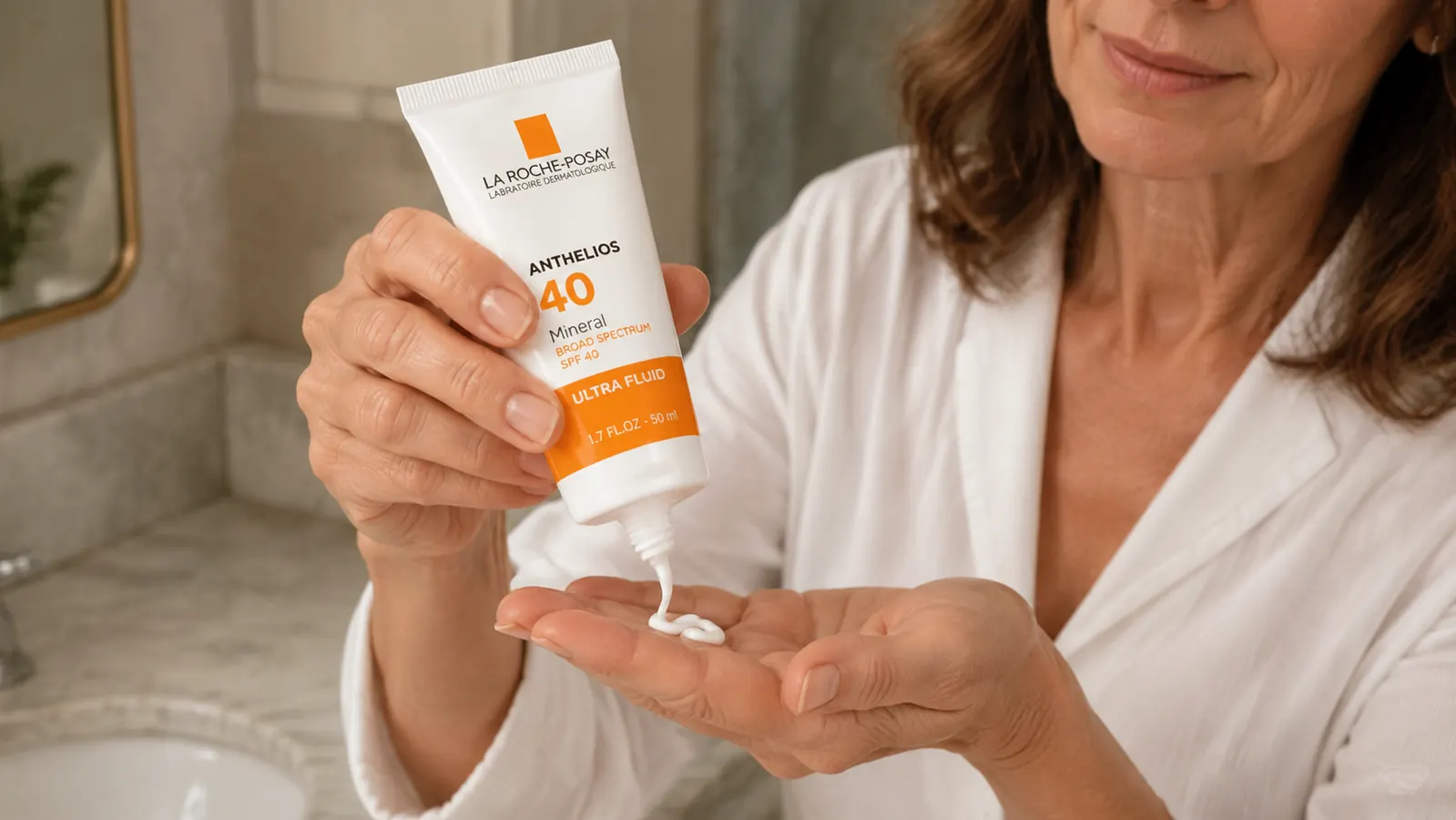
My routine is simple by design. After my moisturizer has absorbed for about two minutes, I dispense roughly a quarter-teaspoon of the Anthelios fluid onto my fingertips and press it across my forehead, cheeks, nose, chin, and down onto my neck. The formula is thin, almost like a serum crossed with a light lotion. It absorbs in about 45 seconds without rubbing, and I follow immediately with whatever tinted SPF lip balm I am using that week. I work from home three days a week and commute two. On commute days I reapply around noon using a small powder sunscreen brush over my makeup. On weekends, especially if I am outside for more than an hour, I reapply the fluid straight over bare skin if I am not wearing makeup.
I tested it across all four months without switching to any other facial sunscreen, so this is a clean, single-product look. My skin type: combination, meaning oily T-zone and normal-to-dry cheeks. Diagnosed mild rosacea on my nose and inner cheeks. History of cystic breakouts along my jawline when I use formulas with silicone-heavy or comedogenic ingredients. That last point matters a lot for the next section.
I also ran through three full tubes across the four months. Each tube is 1.7 fl oz and lasts me about five to six weeks with daily full-face and neck application, which tracks with what most users report.
The Finish: What It Actually Looks Like on Your Face
The Anthelios Ultra-Light Fluid dries to what I would call a natural matte-satin finish. Not powdery, not dewy, and definitely not the wet-look finish you get from some European sunscreen formulas. By the two-week mark I had stopped noticing it entirely, which is exactly what you want from a daily sunscreen. It just became part of the routine, the way a moisturizer does.
White cast is essentially nonexistent. This formula uses chemical UV filters rather than zinc oxide or titanium dioxide, so there is nothing to create that ashy residue on medium and deeper complexions. I am fair with pink undertones and I see zero cast. A friend with a medium-olive complexion tried it and reported the same. That said, if you are committed to a purely mineral formula for personal or skin-sensitivity reasons, this is not that product. The chemical filters are what make the finish possible.
Under foundation it behaves extremely well. Makeup goes on smoothly over it, does not separate, and there is no pilling if you wait the 45 to 60 seconds for the fluid to set. I use a lightweight tinted moisturizer most days, and the two layer together as if they were made to go together.

Sensitive Skin Performance: The Redness and Breakout Report
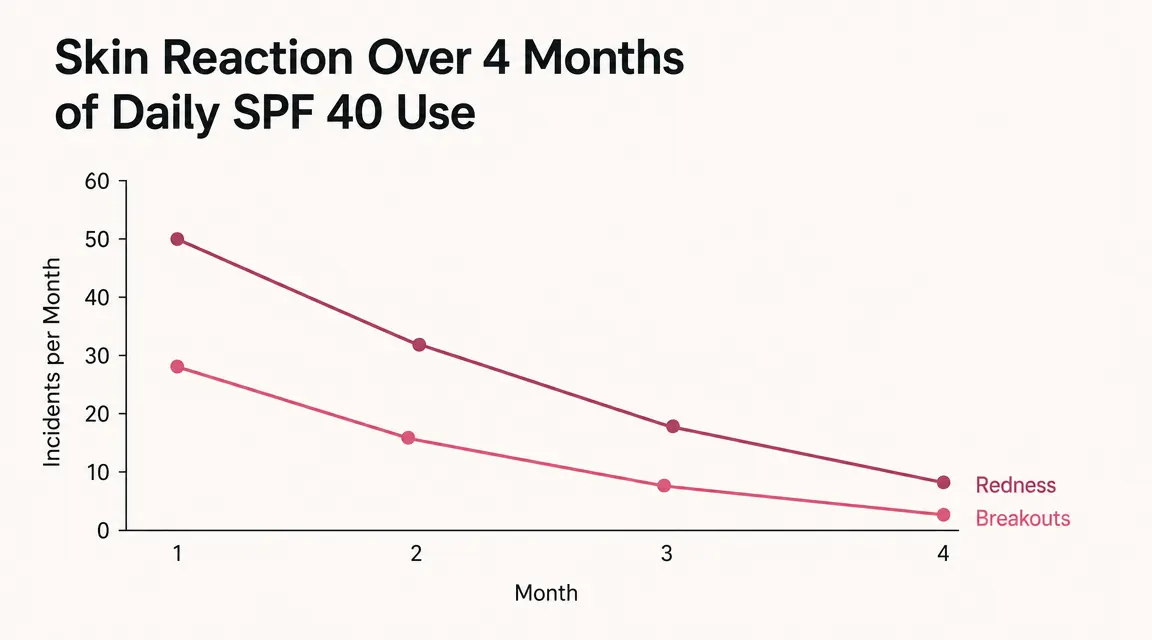
This is the section I spent four months gathering data for. The short answer: my skin did not break out from this sunscreen, not once. My jawline cysts, which typically flare every three to four weeks with the wrong product, stayed quiet for the entire test period. I attribute that to the non-comedogenic formulation, which is tested specifically on acne-prone skin. The inactive ingredient list avoids the heavy silicones that typically trigger my breakouts.
The redness story is a little more nuanced. In week one I noticed a very mild flushing sensation about 20 minutes after application, just on the center of my nose where my rosacea is most active. It was not painful or dramatic, but it was there. By week three it had stopped entirely. My best guess is that my skin needed a short adjustment period to the chemical UV filters. If you have active, inflamed rosacea, start every other day for the first two weeks and see how your skin responds before committing to daily use.
Four months in, my dermatologist looked at my skin and said the sun-damage areas on my cheekbones had not gotten any worse. That was the real result I was after.
The Ingredient Breakdown: What Is Doing the Work
The active UV filters in Anthelios SPF 40 are Avobenzone (3%), Homosalate (10%), Octisalate (5%), and Octocrylene (7%). That combination provides broad-spectrum UVA and UVB coverage. Avobenzone handles the long UVA wavelengths that drive the most photoaging, and the other three provide UVB blocking and help stabilize the avobenzone so it does not degrade in sunlight as quickly as it would on its own.
The base formula includes glycerin for light humectant hydration, a small amount of dimethicone for slip (far less than problem formulas I have reacted to), and La Roche-Posay's signature thermal spring water in the base. The thermal spring water is not marketing fluff. It has a documented soothing effect on reactive skin and is the reason this line was originally developed for use after dermatological procedures. The overall formula is fragrance-free, paraben-free, and tested on sensitive skin by dermatologists.
One thing worth knowing: it does not contain any anti-aging actives like niacinamide, vitamin C, or peptides. It is a dedicated sunscreen, not a hybrid. If you are using an active serum in the morning, you will layer that underneath, then apply this on top. Keep that order.
How It Held Up Through a Full Day
A sunscreen that feels good at 8 a.m. is only useful if it is still providing coverage at noon and beyond. I cannot test UV protection quantitatively in my bathroom, but I can report on how the formula wears. On days I did not reapply, my skin still felt comfortable and looked consistent from morning through mid-afternoon. The formula does not break down visibly or start migrating into fine lines the way some lighter formulas do in heat.
In summer humidity, the T-zone got slightly shinier by early afternoon, as it always does regardless of sunscreen. That is a skin-type issue, not a formula flaw. On cooler days in full clothing I honestly would not have reapplied if I had not made a point of doing it as part of the test. The wear time felt genuinely two-plus hours under real sun exposure, which aligns with SPF chemistry regardless of the specific product.
What I Would Change
There are two things about this product that are worth naming honestly. First, the price. At a premium rate for 1.7 oz, you are paying a meaningful premium over drugstore sunscreens. A comparable-feeling CeraVe or EltaMD option costs less per ounce in most cases. If budget is a real constraint for you, there are legitimate alternatives. The Anthelios formula earns its price for sensitive skin that has already cycled through cheaper options without success, but it is not the only sunscreen that works.
Second, the tube packaging. The flip-cap applicator is fine, but the tube is not especially easy to squeeze in the last two weeks of use. I ended up cutting the bottom of my last tube to get the product out, which feels fussy for a daily essential. A pump dispenser would make this a much better experience. Some versions sold in Europe do have a pump, but the standard U.S. tube does not.
What I Liked
- Absorbs fast and finishes nearly matte, no greasy or waxy residue
- No white cast whatsoever, wears well under foundation or bare
- Non-comedogenic and fragrance-free, designed for sensitive and reactive skin
- Broad-spectrum UVA and UVB coverage with a stable avobenzone formula
- Thermal spring water base has a genuine soothing effect on redness-prone skin
- Layering with serums and moisturizers is seamless, no pilling
Where It Falls Short
- Price per ounce is higher than most drugstore sunscreens
- Chemical filters only, not a mineral option for those who require it
- Tube packaging is difficult to empty cleanly in the final weeks
- Mild initial flushing possible for active rosacea, requires a brief adjustment period

Who This Is For
This sunscreen was built for people who have a history of reacting to sunscreens. If you have tried four or five options, broken out from three of them, gotten a white cast from the other two, and quietly given up on daily SPF, the Anthelios Ultra-Light Fluid is the one most likely to change your mind. The formula is genuinely thoughtful about reactive skin. The finish is good enough for daily wear with or without makeup. If you are 40 or older and your dermatologist keeps telling you to wear sunscreen and you keep not doing it because nothing feels right, this is worth trying.
It also works well as an everyday option for people who have already been wearing sunscreen consistently but want something that feels lighter and plays better with their morning routine. If your current sunscreen is fine but slightly annoying to wear, this will likely feel like a real upgrade.
Who Should Skip It
If you need a mineral-only formula because of known chemical UV filter sensitivity or because you are pregnant and your doctor has advised it, this is not your product. Same if you are on a tight budget and a comparable drugstore formula has already been working for you. There is no reason to pay more for the La Roche-Posay name if a cheaper sunscreen is doing its job without irritating your skin. And if your skin is very dry and you rely on your sunscreen to pull double duty as a moisturizer, the hydration in this formula is fairly light. You will likely want a moisturizer underneath.
For a direct side-by-side look at how this formula compares to the EltaMD UV Physical option that some sensitive-skin shoppers prefer, see my breakdown of La Roche-Posay Anthelios vs EltaMD UV Physical. And if you are still deciding whether daily sunscreen is worth the effort and the money, 10 reasons daily sunscreen prevents more aging than any serum makes a compelling case using the research.
Four months in, my skin is calmer and my dermatologist confirmed the sun damage stopped progressing. That is the only review that really matters.
La Roche-Posay Anthelios SPF 40 Ultra-Light Fluid. Rated 4.5 stars across more than 31,000 reviews. Fragrance-free, non-comedogenic, tested on sensitive skin.
Amazon Check Today's Price on Amazon →