
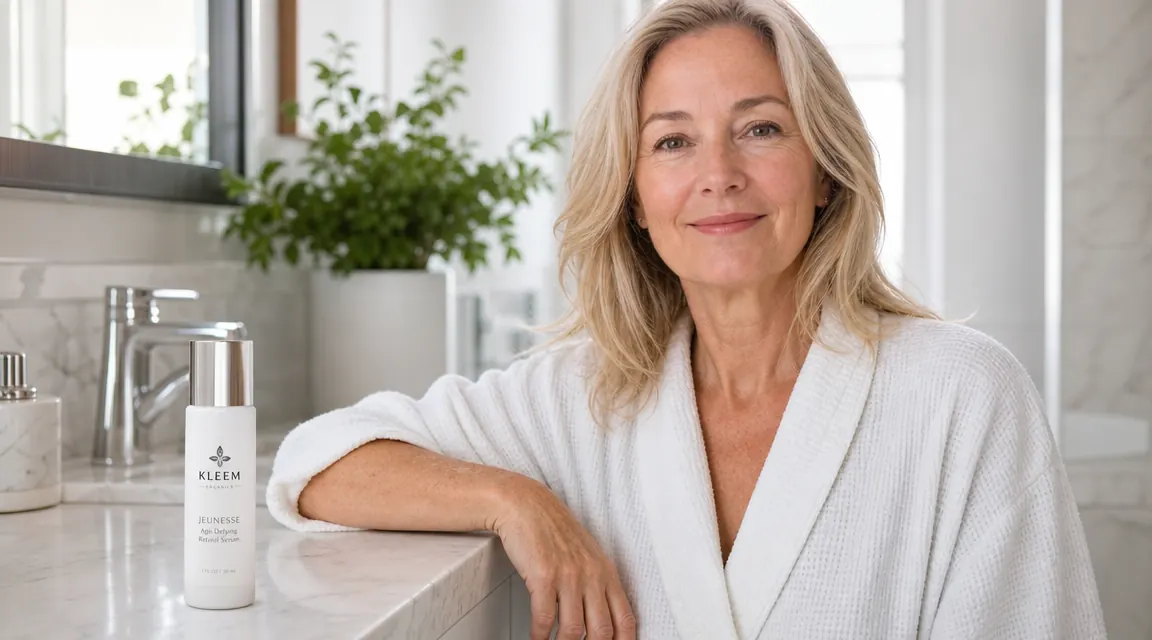
I turned 52 last fall, and my skin had a lot to say about it. The dark spots from a summer spent gardening without sunscreen were still sitting there in January, three shades deeper than the rest of my face. The corners of my mouth had gotten that slightly crumpled quality I associate with old leather. And my overall tone, which had always been fairly even, had taken on a flat, yellowish cast that no amount of good moisturizer seemed to touch. I had been reading about vitamin C serums for years without ever actually committing to one. They oxidize, I told myself. They sting. They cost a fortune for something that turns brown in the bottle before you finish it. Then a dermatologist friend mentioned the La Roche-Posay Pure 12% Vitamin C Serum specifically, noting the stabilized formula and the fact that it uses a gentler derivative alongside the active ascorbic acid. I decided to give it a genuine test run: every single morning, three months straight, no skipping.
What follows is everything I noticed during those three months, including the stretch in weeks two and three where I almost gave up, and the point around week seven when I finally understood what the fuss was about.
The Quick Verdict
A solid, well-formulated vitamin C serum that delivers real brightening over time, with a learning curve in the first few weeks and a price tag that asks you to be patient enough to see it through.
Amazon Check Today's Price →If dark spots and dull skin are what you're fighting, this serum has 18,000 reviews saying the same thing.
La Roche-Posay Pure 12% Vitamin C Serum with hyaluronic acid and salicylic acid. Currently available on Amazon with fast shipping.
Amazon Check Today's Price on Amazon →How I Used It
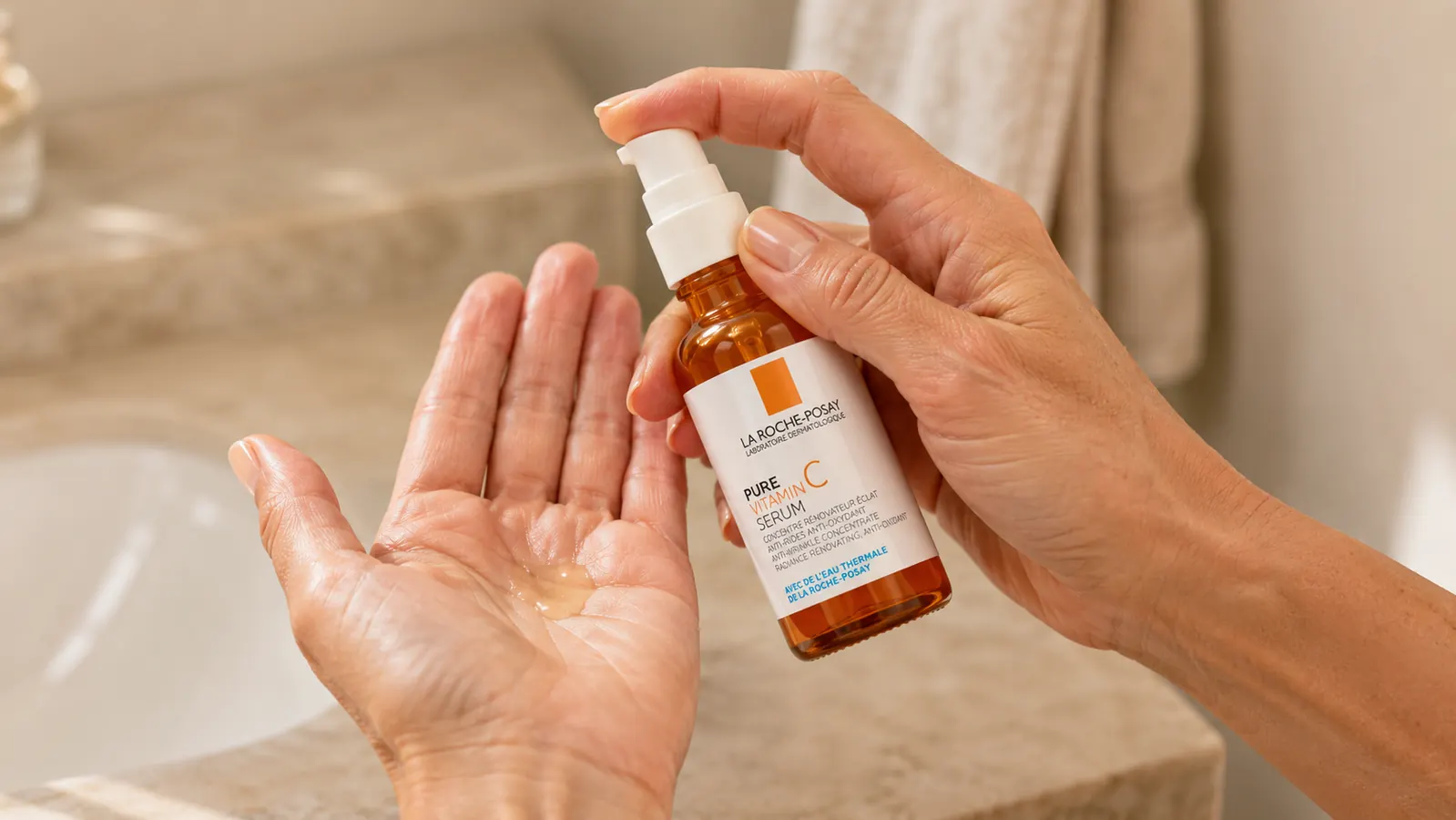
My morning routine is simple by design: cleanser, serum, moisturizer, SPF 40. I applied the La Roche-Posay vitamin C serum immediately after cleansing on a damp face, which the directions suggest. The pump dispenses a measured drop, and three pumps covered my face and neck without waste. I let it absorb for about ninety seconds before layering my moisturizer on top. Sunscreen came last. Consistency was the one thing I committed to without exceptions, because every dermatologist I respect says vitamin C does nothing if you use it three days a week and forget it the rest of the time.
My skin type is combination: oily through the T-zone, normal to slightly dry along the cheeks. I have some post-inflammatory hyperpigmentation from old breakouts, a cluster of sun spots on my left cheek from years of not being serious about SPF, and I am in perimenopause, which has made my skin both more reactive and less predictable than it used to be. I mention all of this because context matters. A serum that works beautifully on dry skin might behave differently on combination skin, and vice versa.
I tracked changes by taking the same photo in the same bathroom light every Sunday morning before applying anything. It is not a scientific method, but it gave me something more useful than vague impressions.
The First Three Weeks: Patience Required
I want to be straight with you about weeks one through three, because a lot of vitamin C serum reviews skip this part. The serum felt fine going on: lightweight, slightly tacky for thirty seconds, then gone. No strong smell. No stinging. My skin did not react badly. But I also did not see anything. The spots were still there. The tone looked the same. At day eighteen I genuinely considered stopping, because I could not figure out what I was paying for.
What kept me going was a note I had read about the timeline for vitamin C: the ingredient works at the cellular level and takes roughly six to eight weeks before surface changes become visible. Collagen synthesis, melanin suppression, antioxidant accumulation in the skin are processes that happen slowly. I had committed to three months, so I kept going.
Weeks Four Through Eight: The Shift
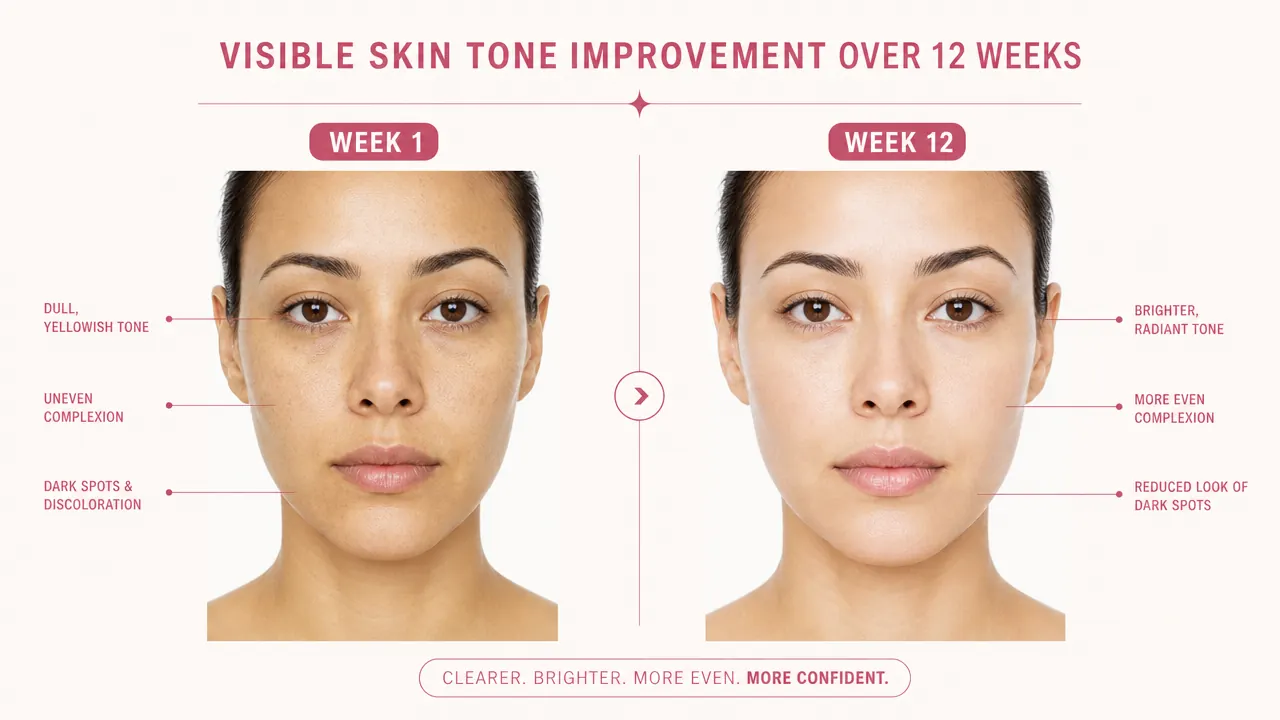
Around day twenty-eight I noticed something that surprised me: my skin looked cleaner than usual, not dramatically, but in the way a window looks after you wipe it down. The flat yellowish quality I had been unhappy with was less pronounced. I checked my photos and could actually see it in the side-by-side comparison. Subtle but real.
By week six the dark spot cluster on my left cheek had visibly lightened. Not erased, not invisible, but noticeably lighter than it had been. The old breakout marks on my chin were also fading in a way they had not budged in the prior two years of moisturizer-only care. I started to look forward to my morning routine in a way that felt genuinely earned rather than optimistic.
Around week six the dark spot cluster on my left cheek had visibly lightened. Not erased, but noticeably lighter than it had been in two years of moisturizer-only care.
Texture also improved during this period. My skin felt smoother under my fingertips, especially through the cheek area. I credit the salicylic acid in the formula for some of this, since salicylic is a gentle exfoliant that helps with surface cell turnover. The combination of vitamin C for brightness and salicylic for texture is one of the smarter formulation decisions La Roche-Posay made with this particular serum, and it is not something every competitor includes.
The Ingredient Deep Dive
The La Roche-Posay Pure 12% Vitamin C Serum uses pure L-ascorbic acid, which is the form with the most clinical evidence behind it, at a 12% concentration. That sits in the research-supported sweet spot for effectiveness without being as aggressive as the 15% to 20% formulas that are more likely to cause irritation, particularly on sensitive or reactive skin. Paired with the ascorbic acid is hyaluronic acid for hydration and salicylic acid at a low, cosmetic-grade concentration for gentle surface exfoliation.
The stability question is real and worth addressing. Pure vitamin C oxidizes on contact with air and light, which is why poorly formulated serums turn orange or brown in the bottle and lose their effectiveness. This formula is packaged in a dark bottle with a pump closure that minimizes air exposure. In three months of daily use my bottle never turned more than a very pale yellow, which suggests the stabilization is working. I stored it away from the window, which the instructions recommend.
One thing I did not expect was how well it layered. Some vitamin C serums leave a pilling residue when you apply moisturizer on top. This one absorbed cleanly and my moisturizer went on without any disruption. Under SPF it was a non-event. On the days I wore foundation, I did not notice any interaction.
Month Three: The Full Picture
By the end of three months, comparing my before and after photos, the changes were clear enough that my husband commented without prompting. That might be the most honest review I can give. The sun spot cluster was probably 50 to 60 percent lighter. The overall tone was more even, with the yellowish cast mostly gone. Fine lines on my forehead looked slightly softer, though I will not overstate the anti-wrinkle effect, this is primarily a brightening and antioxidant serum, not a retinol alternative.
What the serum does not do: it did not make my pores smaller in any meaningful way, and it did not address the deeper lines around my mouth. Those would need a retinol or a prescription option. The results stayed in its lane, which is actually a mark of an honest product. I also want to be clear that three months is not forever. Maintaining the results requires continuing to use it, which means the ongoing cost is part of the equation.
How It Compares to Other Options
If you are researching this serum, you have probably seen SkinCeuticals C E Ferulic come up repeatedly. It is the benchmark vitamin C serum that dermatologists often cite, and the results are well-documented. But it costs roughly three to four times what La Roche-Posay charges, which puts it out of reach for most people who are not already committed enthusiasts. I have a longer comparison of the two if you want to dig into the formulation differences: La Roche-Posay vs SkinCeuticals CE Ferulic. The short version is that the La Roche-Posay is meaningfully less expensive and delivers real results for most skin types, while SkinCeuticals has a more clinically studied formula and may edge it out for skin that is particularly stubborn or for someone who has already tried the middle-tier options without satisfaction.
I have also tested a handful of drugstore vitamin C serums in the ten to fifteen dollar range over the years. They tend to use vitamin C derivatives rather than pure L-ascorbic acid, which are more stable but generally less potent. If you are new to vitamin C and want to test your skin's response before committing to a full-price serum, that is a reasonable approach. But if you have already done that step and want something that will genuinely move the needle on dark spots and tone, La Roche-Posay sits at a level that the budget options struggle to match. If you want more on why vitamin C belongs in your routine in the first place, I put together a piece covering the core reasons: 10 Reasons Vitamin C Serum Brightens Skin.
What I Liked
- 12% L-ascorbic acid is the evidence-backed form at a research-supported concentration
- Visible brightening on dark spots and uneven tone within six to eight weeks of consistent use
- Lightweight texture layers cleanly under moisturizer and SPF with no pilling
- Dark bottle with pump minimizes oxidation, stable over a full bottle's use
- Hyaluronic acid adds light hydration without making the formula heavy
- Rated 4.4 stars across nearly 19,000 Amazon reviews, not a small sample
Where It Falls Short
- No visible results for the first three to four weeks, patience is genuinely required
- At a mid-range price, it is not cheap, and you need to use it consistently to justify that cost
- Pure L-ascorbic acid formulas are not ideal for very sensitive or rosacea-prone skin, which may tolerate derivatives better
- Does not address deeper wrinkles or sagging, this is a tone and texture serum, not a lift
- Bottle does not show remaining product level, easy to be caught off-guard when it runs out
Who This Is For
This serum is a good fit if you are dealing with uneven skin tone, sun spots, or dullness that moisturizer alone has not touched. It works best on normal, combination, and mildly oily skin. If you are in your 40s or 50s and starting to notice the cumulative effect of years of sun exposure showing up as spots and a flat, tired-looking complexion, this is the kind of product that can genuinely reset that. It also works well as a protective layer if you spend a lot of time outdoors. Vitamin C is one of the few topical antioxidants with strong evidence for neutralizing free radical damage from UV and pollution before it causes visible aging.
Who Should Skip It
If you have rosacea, very reactive skin, or a known sensitivity to acids, the pure L-ascorbic acid formula may cause redness or tingling that makes it hard to use daily. In that case, a vitamin C serum built on a derivative like ascorbyl glucoside or sodium ascorbyl phosphate will be gentler, though typically slower-acting. You should also skip it, or at least pause, if you are using a high-percentage retinol or prescription tretinoin in your routine without guidance on layering, the combination is not dangerous but layering potent actives without knowing what you are doing can lead to irritation that makes your skin worse before it gets better. And if you are looking for a product that will address deep set lines around the mouth or loss of firmness, this is not the right tool. That territory belongs to retinoids and, honestly, a good sunscreen used every day for the next decade.
Three months in, my dark spots are lighter and my tone is more even. That is the honest summary.
La Roche-Posay Pure 12% Vitamin C Serum. Over 18,000 Amazon reviews, 4.4 stars. Free returns if it does not work for your skin.
Amazon Check Today's Price on Amazon →