

If you've spent any time in the skincare aisle, you've probably stood in front of both of these. Neutrogena Hydro Boost Gel Cream and CeraVe Moisturizing Cream are two of the most consistently recommended drugstore moisturizers, and they show up on practically every dermatologist shortlist. So which one do you actually buy? I've used both long enough to give you a straight answer.
The short version: they're solving slightly different problems. Hydro Boost is a daytime gel cream built around hyaluronic acid. CeraVe Moisturizing Cream is a thicker, ceramide-heavy formula that leans toward barrier repair. If you're trying to pick one, knowing which problem you're trying to solve makes the decision a lot easier. But let's go through the details so you can see exactly where each one wins.
| Neutrogena Hydro Boost Gel Cream | CeraVe Moisturizing Cream | |
|---|---|---|
| Texture | Lightweight gel-cream, absorbs quickly | Thick, rich cream, takes longer to absorb |
| Key Ingredients | Hyaluronic acid (humectant), glycerin | Ceramides (1, 3, 6-II), hyaluronic acid, niacinamide |
| Best Use Time | Morning and/or daytime | Night or winter daytime |
| Under Makeup | Excellent, non-greasy base | Can pill under foundation; best without makeup |
| Skin Types | Normal, combination, oily-dry | Very dry, eczema-prone, damaged barrier |
| Fragrance | Fragrance-free | Fragrance-free |
| Size / Price | Small 1.7 oz jar, moderately priced | Large 16 oz tub, similar cost to smaller jars |
| Finish | Dewy, slightly luminous | Matte to satin, no luminosity |
| Barrier Repair Focus | Hydration focus (draws water in) | Barrier repair focus (seals water in) |
Where Neutrogena Hydro Boost Wins
The texture is the first thing you'll notice. Hydro Boost is a gel cream, which means it feels light, absorbs fast, and doesn't leave that heavy film that thicker creams sometimes do. If you've ever put on a moisturizer and then immediately felt like you needed to blot your face, this one won't do that to you. It sinks in within about 30 seconds and your skin feels soft, not coated.
That lightness makes it a strong morning moisturizer. It sits well under SPF, primes nicely under foundation, and doesn't cause that pilling problem that frustrates so many people with their skincare layering. The hyaluronic acid formula draws moisture from the air and binds it to your skin, so you get genuine hydration rather than just surface lubrication. For combination skin especially, where the T-zone gets oily but the cheeks still get dry, this balance is hard to find at any price point. The fact that it's budget-friendly and fragrance-free makes it genuinely hard to argue against.
Your skin is dry by noon and your current moisturizer isn't cutting it.
Neutrogena Hydro Boost Gel Cream delivers 48-hour hyaluronic acid hydration in a lightweight formula that works under makeup and doesn't leave a greasy film. Fragrance-free, dermatologist-tested, and consistently in stock at a fair price.
Amazon Check Today's Price on Amazon →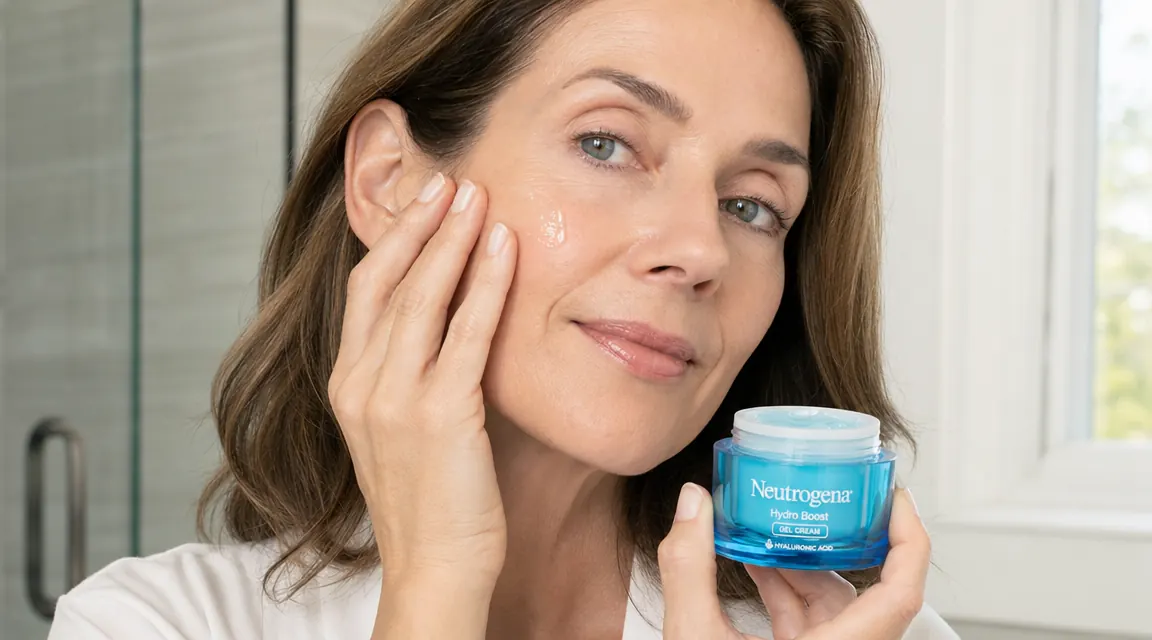
Where CeraVe Moisturizing Cream Wins
CeraVe Moisturizing Cream is in a different category when it comes to barrier repair. It contains three ceramides (1, 3, and 6-II) that closely mirror the lipids found naturally in healthy skin. If your barrier has been compromised from cold weather, over-exfoliation, retinol use, or just years of skin changes, those ceramides do real work. This isn't just marketing language. There's solid dermatology behind ceramide-based formulations for treating and maintaining the skin's protective function.
The size-to-price ratio is also genuinely remarkable. A 16-ounce tub at around the same price as a 1.7-ounce jar? If you're moisturizing your whole body or you just want a cream you can use generously without counting the days until you run out, CeraVe wins that math problem every time. It's a legitimate go-to for extremely dry skin, eczema-prone skin, and anyone who uses actives like retinol or acids and needs a reliable, non-irritating base.
The Ingredient Difference That Actually Matters
Both products contain hyaluronic acid. That's where the similarity ends at the ingredient level. Hydro Boost concentrates on being a humectant, meaning it pulls water into the skin and holds it there. That's fantastic for daily hydration maintenance. CeraVe adds ceramides that work as occlusives and barrier-repair agents, so it's doing something more structural. Think of Hydro Boost as refilling the water in your skin's reservoir, and CeraVe as fixing the cracks in the container itself.
CeraVe also includes niacinamide, which has well-documented benefits for reducing redness, improving skin tone, and supporting barrier function. If you have blotchy, uneven skin or deal with rosacea or sensitivity, that niacinamide is doing quiet, useful work. Hydro Boost has no equivalent. So if your skin concern goes beyond just feeling dry and into looking irritated or red, CeraVe addresses more of that picture.
Hydro Boost is for women who want their skin to feel plump and comfortable by morning. CeraVe is for women whose skin needs to heal before it can feel good.
Texture, Layering, and How They Wear Through the Day
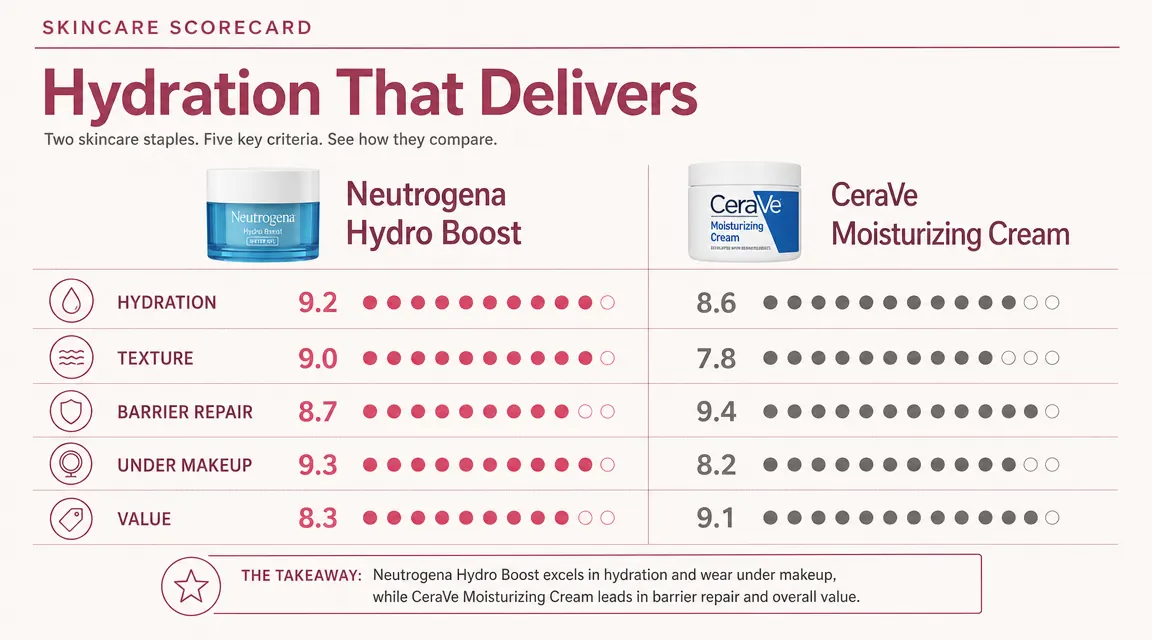
Hydro Boost gives you a dewy, slightly luminous finish. After it absorbs, your skin looks awake and hydrated without being shiny. That works beautifully if you're going into a workday or applying SPF and light makeup on top. Most women I've heard from who switched to a gel cream said they couldn't believe how light it felt compared to what they were using before, and how much better their makeup sat on top of it.
CeraVe Moisturizing Cream is matte to satin and doesn't offer that luminosity. It can also be tricky under makeup. The thick formula tends to pill if you apply foundation too quickly after it, and it leaves a heavier feel on the skin that some people love at night but find uncomfortable during the day. That's not a knock on the product. It's just not designed to be a daytime, under-makeup moisturizer. Use it at night or on days when you're staying in and your skin needs a full recovery.
Value and What You're Really Paying For
The price-per-ounce comparison looks absurd on paper in CeraVe's favor. You're getting nearly ten times as much product for almost the same price. But that comparison only holds if you're using both products the same way. Hydro Boost is formulated for your face. That 1.7 ounce jar is designed for facial use, and at the amount you'd use on your face, it lasts a reasonable amount of time. You wouldn't lather CeraVe Moisturizing Cream's entire 16 ounce tub on your face. Most people use that tub for body, hands, and elbows too.
For the face specifically, the value comparison gets a lot closer. Both are affordable by skincare standards. Neither is going to stretch your budget. The real question is which one is actually doing the job your skin needs done. If you're getting the right product for your skin type and concern, both represent good value.

Who Should Buy the Neutrogena Hydro Boost
Hydro Boost is the right pick if your skin is normal to combination, you want a lightweight daily moisturizer that works under SPF and makeup, and your main complaint is that your skin feels dry or tight by midday but not damaged or irritated. It's also a strong choice if you're new to skincare and want one solid, proven moisturizer that won't overwhelm your routine or your skin. At 4.6 stars across over 4,000 reviews, it earns that recommendation consistently. If you've been reaching for heavy creams because you thought more product meant more hydration, Hydro Boost will probably surprise you with how much moisture a lightweight gel can actually deliver.
Who Should Skip Hydro Boost and Go with CeraVe Instead
If your skin is very dry (not just a little dry, but cracking-in-winter, tight-immediately-after-washing dry), or if you have eczema or a compromised barrier, CeraVe Moisturizing Cream will serve you better. The same is true if you're using retinol or prescription retinoids regularly and need something that actively helps your skin recover from those actives. The ceramide formula is specifically suited to that job. And if you're looking for one product that works for your face and the rest of your body, CeraVe wins that category with no contest. You'd go through Hydro Boost at an expensive rate trying to moisturize your whole body.
If daytime hydration under makeup is your problem, Hydro Boost is your answer.
Neutrogena Hydro Boost Gel Cream is fragrance-free, non-comedogenic, and built around hyaluronic acid for real hydration that lasts through the day. It's one of the few drugstore moisturizers that earns consistent praise from both dermatologists and everyday users.
Amazon Check Today's Price on Amazon →