
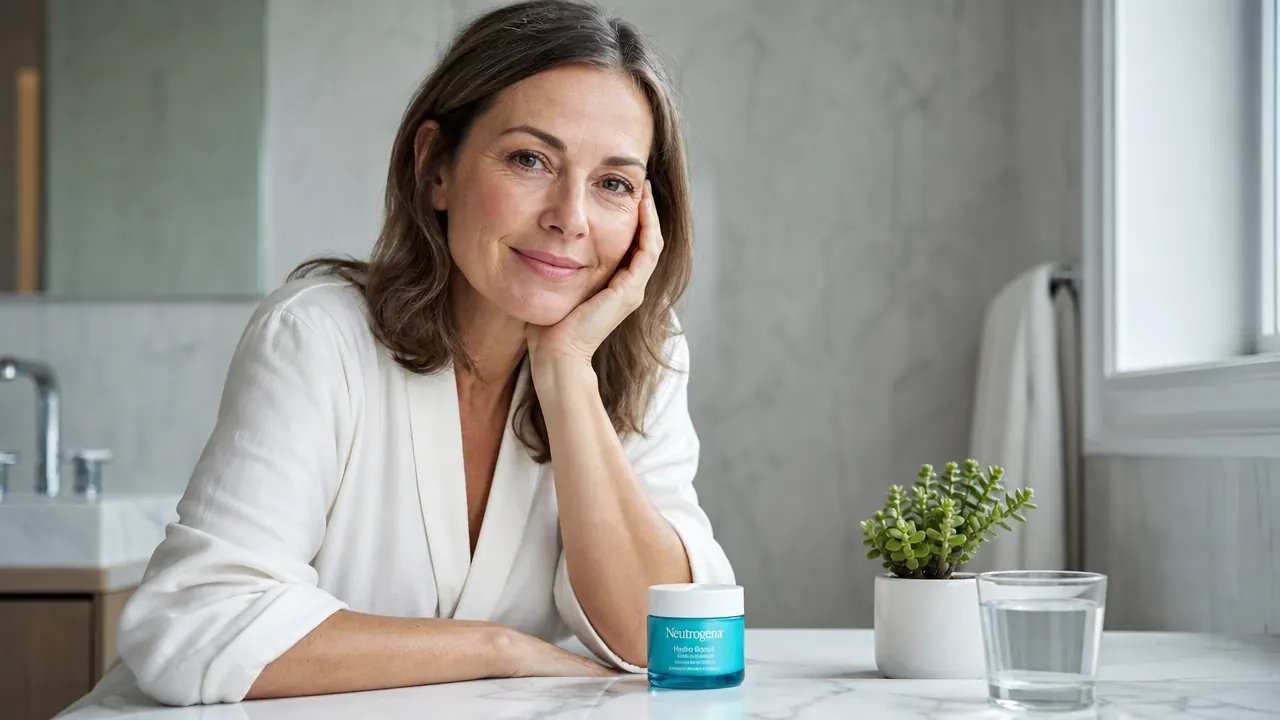
My combination skin has always been difficult to please. By 9 a.m. my cheeks feel tight and parched. By noon, my T-zone has enough shine to read by. I have tried every moisturizer the drugstore sells over the past 20 years, and most of them either load up my forehead or leave my cheekbones begging for more by mid-morning. So when I picked up Neutrogena Hydro Boost Gel Cream, I was skeptical but willing. I am Nora, and I have been reviewing skincare products long enough to know that the marketing on the front of a jar and the results on my actual face are very different things. I wore this product every single day for six weeks before writing a word.
The Hydro Boost line has been a Neutrogena bestseller for years. The gel cream version is aimed at normal-to-dry skin, though I found it works reasonably well for combination skin too, with a few caveats I will get into. The star ingredient is hyaluronic acid, which is one of those ingredients that genuinely earns its reputation. It draws moisture from the air into the skin and can hold up to 1,000 times its weight in water. Neutrogena has built an entire product line around it, and this gel cream is the centerpiece.
The Quick Verdict
A lightweight, fragrance-free gel cream that genuinely delivers all-day hydration on dry and combination skin. The 48-hour claim is marketing, but the real-world results are solid enough to earn a spot in my daily routine.
Amazon Check Today's Price →Your skin is thirsty. Stop throwing heavy creams at it and try what actually works.
The Neutrogena Hydro Boost Gel Cream is fragrance-free, non-comedogenic, and built around hyaluronic acid. Check today's price on Amazon before you decide.
Amazon Check Today's Price on Amazon →How I Used It for Six Weeks
I kept my routine deliberately simple for the duration of this test. Morning: gentle cleanser, Hydro Boost Gel Cream, SPF on top. Evening: same cleanser, the gel cream again, nothing else. No serums, no actives, no layering tricks. I wanted to see what this product could do on its own, without anything else clouding the results. I did that for six consecutive weeks, including through two weeks of unusually dry weather in my house when the furnace was running constantly.
My skin is combination-dry, meaning my cheeks and jawline get tight and flaky if I under-moisturize, while my nose and forehead go oily a few hours into the day. I also have some mild texture on my forehead from years of occasional breakouts. I am in my early fifties. All of that context matters when you are reading my results, because your skin situation may be different.
I used a small amount each time. About a pea-size for the full face, maybe a little more in winter. The gel texture makes it easy to spread thinly, which is an advantage over a heavier cream. I pressed it into my skin rather than rubbing, which I find reduces pilling under sunscreen.
First Impressions and Texture
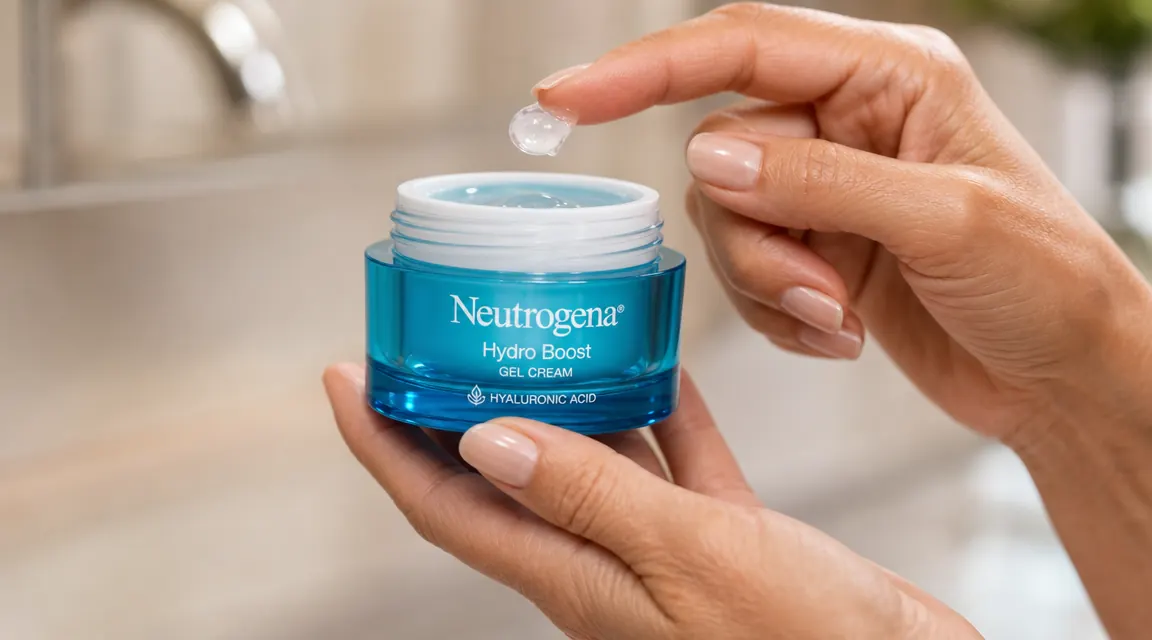
The texture is the first thing you notice. It comes out of the jar as a clear, water-thick gel that looks almost like aloe vera gel. The moment it touches warm skin it melts into a slightly slippery slip, and within about 30 seconds it absorbs and the skin feels neither tacky nor greasy. That is a difficult trick for a moisturizer to pull off, and Hydro Boost does it consistently.
There is no fragrance at all. I want to highlight that because if you have reactive skin or just prefer to avoid fragrance, this is a genuine plus. A lot of drugstore moisturizers at this price point load in synthetic floral notes. Hydro Boost smells like nothing. Some people find that slightly clinical, but after 20 years of avoiding fragranced products, I consider it a feature.
Under makeup it behaved well from day one. It did not pill under my liquid foundation, which is a common problem with gel-textured products. By week two I stopped thinking about it at all, which is the highest praise a moisturizer can get. A good moisturizer should disappear.
By week two I stopped thinking about it at all. That is the highest praise a moisturizer can get. A good one should disappear.

Weeks One Through Three: The Hydration Build
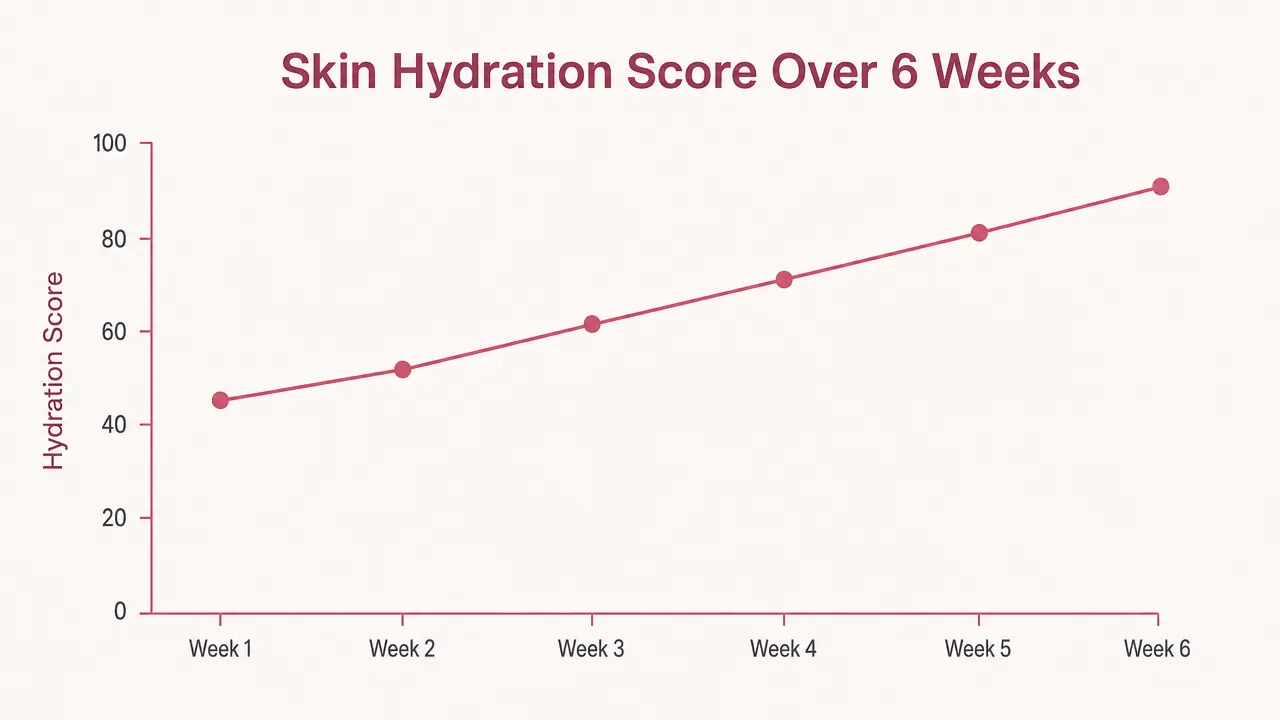
The first week was fine but unspectacular. My skin felt comfortable, which is a better baseline than I have with many moisturizers, but I did not notice any dramatic shift. I expected that. Hyaluronic acid takes time to build a consistent hydration reservoir in the skin. I was not looking for overnight transformation.
By the end of week two, something had shifted. My cheeks were no longer pulling tight by mid-morning. I checked in on my skin around 10 a.m. on a few different days and it felt genuinely comfortable, not just briefly moisturized. The texture on my forehead appeared slightly smoother. Not dramatically different, but enough to notice when I applied foundation.
Week three coincided with a stretch of particularly cold, dry weather at my house. The furnace ran all day and the air inside dropped to about 30% humidity, which typically wrecks my skin. That week I used a slightly larger amount morning and evening. My cheeks stayed comfortable. I did not wake up with the dry, creased look I usually get in dry-air conditions. That was the moment I became genuinely impressed.
Weeks Four Through Six: Long-Term Results
By week four, my combination skin had settled into a noticeably more balanced state. My T-zone was still oilier than my cheeks, as it always will be, but the difference between the two zones felt less extreme. I attribute some of that to my cheeks being properly hydrated rather than the cream doing anything to control oil production, since it does not contain any mattifying ingredients. Hydrating dry areas can make oily zones look relatively calmer by comparison.
The skin on my cheekbones looked a little more plump by week five. Not dramatically, not in a way I would photograph. But when I looked at my skin in natural light in the morning, before makeup, it had a slight bounce to it that I had not been seeing a month prior. My jawline, which tends to go a little dull and slightly crepey in winter, looked cleaner.
Week six I started testing what happened if I skipped it for a day. My skin felt noticeably drier and looked a little flatter. That tells me the product was doing real work and not just coating the surface. A good moisturizer builds a hydration habit in your skin. This one did that over six weeks.
About That 48-Hour Hydration Claim
I want to address the 48-hour claim directly because it is the headline on the packaging and it deserves scrutiny. In my testing, my skin did not stay hydrated for 48 hours from a single application. By the next morning after an evening application, my cheeks were noticeably drier. That is not a failure of the product. That is just how skin works. Skin loses moisture constantly through evaporation, particularly overnight when you are not reapplying anything.
What I think the 48-hour claim refers to is the deeper reservoir effect of consistent hyaluronic acid use rather than a single application. Hyaluronic acid does help skin retain moisture over time when used consistently. After six weeks of twice-daily use, my skin's baseline moisture level was clearly higher than it was at the start. That is the real claim, and that version of it holds up.
If you pick up Hydro Boost expecting to apply it once and have your skin stay soft for two straight days, you will be disappointed. Apply it morning and evening as part of a real routine and you will see the cumulative benefit the claim is actually describing.
What I Liked
- Absorbs fast and leaves no sticky or greasy residue
- Completely fragrance-free, which is a genuine differentiator at this price
- Works well under SPF and liquid foundation without pilling
- Noticeably improves dry-cheek comfort by weeks two and three
- Non-comedogenic and suitable for sensitive skin
- Accessible price for a product with a clean, effective formula
Where It Falls Short
- The 48-hour hydration claim is overstated for a single application
- May not provide enough moisture for very dry or dehydrated skin in harsh winter conditions without a second layer
- The gel texture can feel slightly cool or 'wet' on first contact if you prefer a warmer, creamier feel
- No added actives like peptides or antioxidants, so it is a pure hydration play with no bonus anti-aging work
- Jar packaging exposes product to air and fingers repeatedly, which can degrade hyaluronic acid over time
How It Holds Up Under Makeup
For the women reading this who care about foundation wear, Hydro Boost is one of the better primers I have used under liquid foundation. The lightweight water-gel base does not interfere with makeup adhesion the way that heavier, silicone-forward moisturizers can. My foundation went on evenly and lasted through an eight-hour day without sliding.
The one caveat is that if you apply too much Hydro Boost, the extra product will sit on the surface and cause foundation to slip. The trick is thin. You want the product fully absorbed before you apply anything on top, which takes about one to two minutes. I gave it time in the morning while I did the rest of my routine and had no issues.

Who This Is For
Hydro Boost Gel Cream is an excellent choice for women with combination or normal-to-dry skin who want a lightweight, no-fuss daily moisturizer. It is particularly good if you wear makeup and need something that will not interfere with your foundation. It is also a strong pick if you are fragrance-sensitive or react to heavily fragranced products. At its price point, it delivers genuine value. You are getting a clean, effective hyaluronic acid formula without paying for a department store name on the jar. If you want a fuller breakdown of how it compares to CeraVe, my Neutrogena Hydro Boost vs CeraVe Moisturizing Cream comparison walks through every difference. And if you want to understand why hyaluronic acid is worth prioritizing, see my piece on 10 reasons a hyaluronic acid moisturizer matters for mature skin.
Who Should Skip It
If your skin is very dry, meaning tight and flaky even after moisturizing, the gel cream formula alone may not be enough in colder months. You would likely do better with the Hydro Boost Water Cream or a richer formula layered underneath. This product shines when your skin is in the normal-to-slightly-dry range. On very dry skin it provides hydration but may need a sealant on top to keep moisture in. Similarly, if you are looking for a moisturizer that also delivers anti-aging actives like retinol, peptides, or niacinamide, this is not that product. It does one thing, and it does it well.
Six weeks later, it is still on my bathroom counter every morning.
Neutrogena Hydro Boost Gel Cream is fragrance-free, non-comedogenic, and gentle enough for daily use on sensitive and combination skin. If your skin has been thirsty and nothing lightweight has stuck, this is worth trying at today's price.
Amazon Check Today's Price on Amazon →