
Most vitamin C serum reviews read like they were written the week after opening the box. Everything smells fresh, the packaging is exciting, and the writer is full of hope. What you rarely get is the view from someone who has been through the full cycle: the early disappointment, the almost-quitting moment, the slow turn, and then the clear-eyed assessment of whether the results justified the ongoing cost. I want to give you that view for the La Roche-Posay Pure 12% Vitamin C Serum, because I think the honest picture is more useful than another five-star summary.
I am going to tell you several things about this serum that the product page will not, including a texture quirk that surprised me, a specific skin type that should probably look elsewhere, and the real reason so many women give up before the serum has a chance to work.
The Quick Verdict
A well-formulated mid-range vitamin C serum that earns its keep for women with dullness and dark spots, provided you give it the full six-to-eight weeks it needs to show results.
Amazon Check Today's Price →Dark spots and an uneven, tired-looking tone are the exact problems this serum was built for.
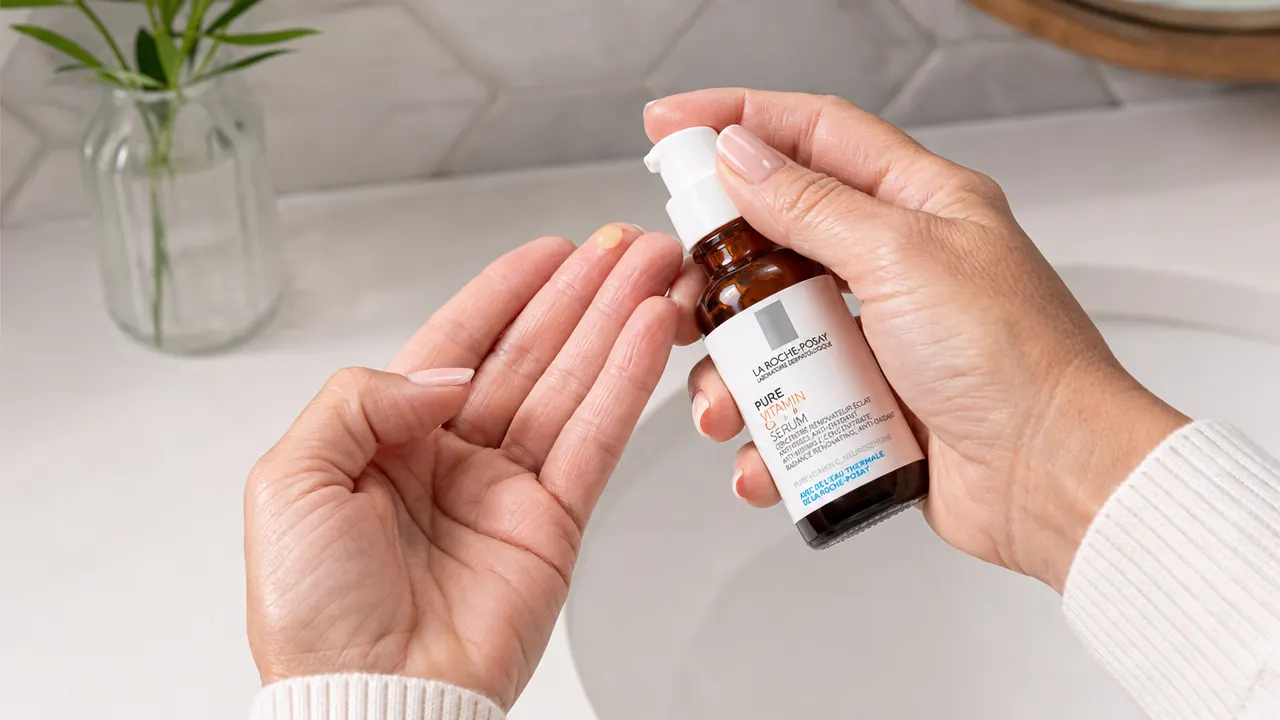
La Roche-Posay Pure 12% Vitamin C Serum with hyaluronic acid and salicylic acid. Nearly 19,000 Amazon reviews and a 4.4-star average. Ships fast.
Amazon Check Today's Price on Amazon →What Nobody Tells You Before You Buy
The scent. Every review I read before buying this serum mentioned the smell in passing, or not at all. It smells faintly acidic, almost like diluted citrus mixed with something slightly chemical. It is not unpleasant, but it is noticeable in the first few seconds after application, and if you are sensitive to scents, it may take some getting used to. It dissipates quickly. But if you were expecting no scent because someone described it as odorless, I want to set that expectation correctly.
The tack. For the first thirty to forty-five seconds after applying this serum, your skin will feel slightly sticky. Not uncomfortably so, but enough that you should not rush into putting on your moisturizer. If you layer too fast, the products start to ball up on your skin and you will waste both. The fix is simple: apply the serum, let it absorb fully, then continue. Most reviews gloss over this step, but it matters for how well the whole routine actually works.
The wait. I want to be genuinely direct here: if you are hoping to see a difference in two weeks, this is not your product. The mechanism by which vitamin C reduces hyperpigmentation requires consistent daily application over six to eight weeks before surface-level changes appear. Women who buy this, use it for three weeks, see nothing, and return it are not doing anything wrong. They just bought a product that needs patience. That is not a flaw in the formula. It is a fundamental property of how the ingredient works in human skin. If you cannot commit to the full timeline, you will likely waste your money.

How I've Actually Been Using It
I have a 47-year-old friend, Karen, who handed me this bottle after she decided the scent bothered her and she was going back to her old routine. I was between serums, so I started using it properly, two to three pumps every morning after cleansing, patted into face and neck, followed by a light moisturizer and sunscreen. I kept at it for eleven weeks without skipping more than four or five days total.
My skin is on the drier side, which I mention because the review_a coverage of this serum was written from a combination skin perspective. Dry skin responds a little differently. I noticed the serum did not add meaningful moisture on its own, the hyaluronic acid in the formula provides some hydration, but on dry skin in winter I still needed a richer moisturizer on top. The formula was never drying, but it was not sufficient as a standalone hydration step either.
The Results, Week by Week
Weeks one through four: nothing visible. I want to state that flatly, because sugarcoating it does not help anyone. My skin felt the same, my spots looked the same, and I had no particular reason to believe the serum was doing anything. This is normal and expected. I kept going because I had committed to the full test.
Week five: the first signal. I was putting on moisturizer and noticed my skin looked less gray in the mirror. Not dramatically, but the flat, slightly washed-out quality it had been carrying through the winter was less pronounced. I took a closer look and realized my overall tone appeared more awake than it had in months. Still no change on the specific spots.
Weeks six and seven: the spots moved. The older sun damage on my right temple, three faint marks I have had since my late 30s, started to visibly fade. They were not gone, but the contrast between them and the surrounding skin decreased. My skin texture also felt smoother, which I attribute partly to the salicylic acid in the formula helping with surface turnover.
Week eleven, the end of my test: I have clearer, more even skin than I started with. The spots are lighter. The gray cast is gone. Fine lines on my forehead look marginally softer, though I would not rate the anti-aging impact as the serum's primary strength. What it is best at, brightening and evening tone, is genuinely what it delivered.
Week five was the first signal. My skin looked less gray in the mirror. Not dramatically, just more awake than it had looked all winter. The spots still had not moved yet.
The Ingredient Question: Does the Formula Actually Justify the Price?
Here is where I want to give you an honest value assessment rather than just restating the marketing copy. The La Roche-Posay serum uses 12% pure L-ascorbic acid. That is the gold standard form of vitamin C, the one with the most clinical research behind it, and 12% is well within the concentration range shown in studies to reduce pigmentation and boost antioxidant protection. So the active ingredient is real and properly dosed.
The supporting cast, hyaluronic acid and salicylic acid, adds meaningful function without pushing the price into dermatologist-office territory. The packaging in a dark pump bottle slows oxidation effectively. In eleven weeks of use my bottle went from clear to only the faintest pale yellow, which means the active ingredient is mostly intact through the end of the bottle. That matters because an oxidized vitamin C serum does not brighten anything.
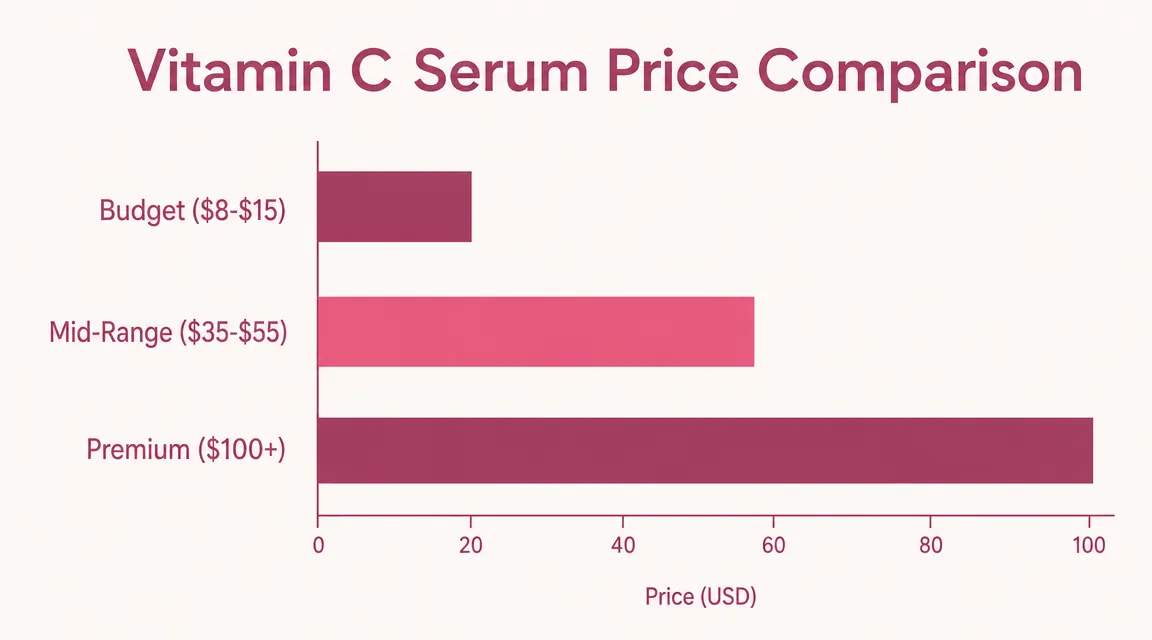
The honest comparison is this: you are paying for reliable formulation, a brand with a long dermatology-focused track record, and ingredients that are not watered down. You are not paying for a breakthrough technology. The same core active in a thoughtfully packaged formula is what you are getting. If that is what you need, the price is fair. If you are looking for something more clinically studied at a higher concentration, you are describing SkinCeuticals CE Ferulic, which costs substantially more and which I have compared directly in a separate piece: La Roche-Posay vs SkinCeuticals CE Ferulic.
What This Serum Gets Wrong
I will be critical here, because honest review means both sides. The bottle does not have any indicator of how much product remains. You will pump and pump and suddenly nothing comes out, and you will have missed your chance to reorder before you run out. For a daily-use serum where consistency is everything, running out unexpectedly is not a minor inconvenience. It breaks the streak that the results depend on.
The serum also does nothing for pore size or facial firmness. If you are hoping to lift or tighten, you need a different tool. And the salicylic acid, while helpful for texture on most skin types, can occasionally cause a mild tingling sensation on dry or freshly exfoliated skin. Not everyone will notice it, but a small number of women report it in the Amazon reviews and I did feel it once after using a gentle acid toner the night before. The solution is simply to not stack too many exfoliating steps in the same twenty-four-hour window.
What I Liked
- 12% L-ascorbic acid is the most evidence-supported form of vitamin C at an effective concentration
- Brightening and tone-evening results are real and visible by weeks six through eight with consistent use
- Layers cleanly under moisturizer and SPF without pilling or greasiness
- Dark pump bottle packaging keeps the formula from oxidizing before you finish the bottle
- Salicylic acid addition improves surface texture alongside the brightening effect
- Nearly 19,000 Amazon reviews at a 4.4-star average gives you a meaningful signal, not an outlier result
Where It Falls Short
- No visible results for the first four to five weeks, easy to give up too early
- Faint acidic scent on application that some women find off-putting
- Slight stickiness for 30-45 seconds means you cannot rush the layering step
- Bottle gives no indication of remaining product, you will run out without warning
- Does not address pore size, firmness, or deeper lines, strictly a brightness and tone serum
- Pure L-ascorbic acid may cause mild tingling if layered over other acid-based products the same day

Who This Is For
This serum is for women who have sun spots, post-breakout marks, or a generally dull, uneven tone that moisturizer has not been able to touch, and who are willing to stay with a product for six to eight weeks without expecting instant feedback. It suits normal, dry, combination, and mildly oily skin types well. If you have been reading about vitamin C for a while and want to actually try one that will not fall apart in the bottle halfway through, this is a sensible place to start. It is also a solid choice if you have already used budget vitamin C serums and found them too weak to make a noticeable difference. There is more context on the full case for vitamin C in a morning routine here: La Roche-Posay Vitamin C Serum Review.
Who Should Skip It
If you have rosacea, reactive skin, or a documented sensitivity to low-pH formulas, pure L-ascorbic acid is not your safest starting point. Vitamin C derivatives like ascorbyl glucoside are gentler and worth exploring before you try anything with a lower pH. You should also skip this, or at least hold off, if your primary concern is sagging skin, deeper expression lines, or loss of volume. No vitamin C serum addresses those things. And if patience is genuinely not something you have right now, whether because of life circumstances or because you have been disappointed by skincare products before and need to see early proof, this serum's slow-burn timeline will likely frustrate you. That is not a knock on the product. It is just an honest read on the fit.
Eleven weeks in, the spots are lighter and the gray cast is gone. That is the honest bottom line.
La Roche-Posay Pure 12% Vitamin C Serum with hyaluronic acid and salicylic acid. Real formula, real results, just not fast ones. Check current availability on Amazon.
Amazon Check Today's Price on Amazon →