

Hand-washing your face works. It has always worked. But if your pores still look congested after cleansing, or your moisturizer seems to sit on top of your skin instead of sinking in, the problem probably isn't your products. It's the layer of dead skin cells, sebum, and everyday buildup that a fingertip and a dime of cleanser just can't fully lift. A silicone cleansing brush changes that equation, and it does it without the harshness of a bristle brush or an abrasive scrub.
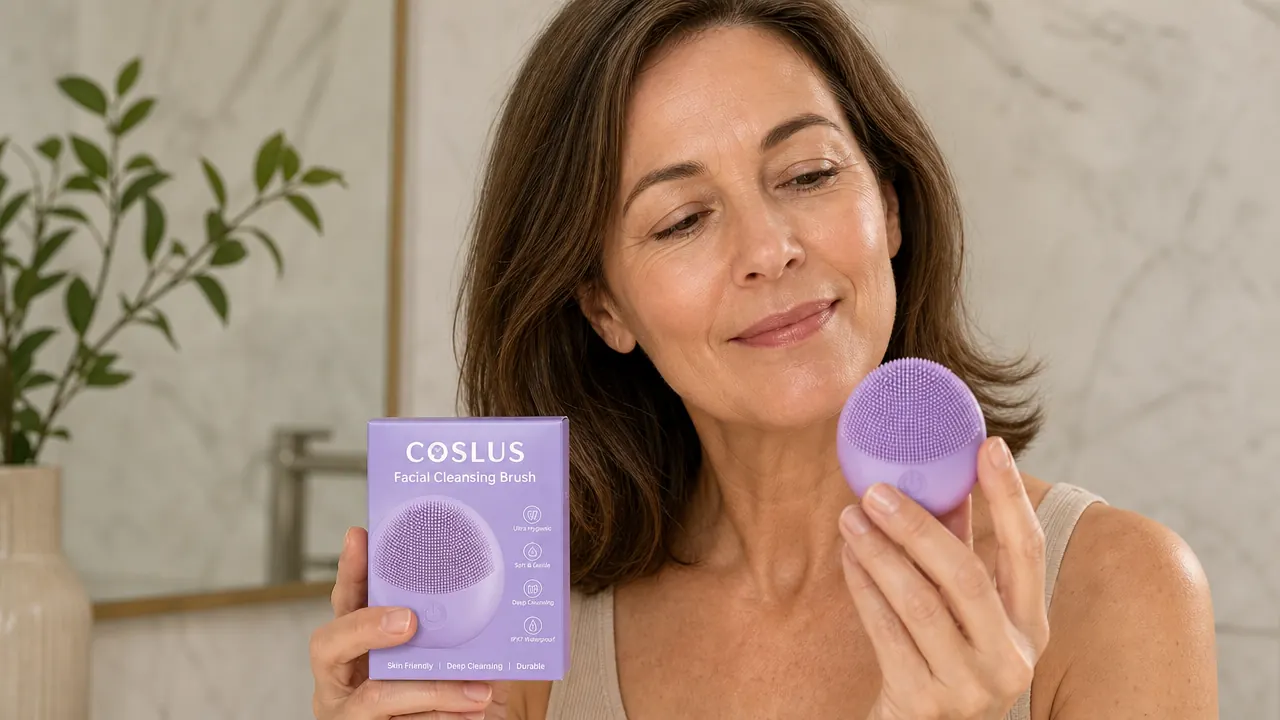
The catch is that using one incorrectly is easy. The tool I'll reference throughout is the COSLUS 7-in-1 Silicone Facial Cleansing Brush, which is what I've been using daily and the one I'd recommend to anyone starting out. Too much pressure, the wrong frequency, or the wrong cleanser can turn a skin-brightening tool into a source of redness and irritation. I've made those mistakes. This guide walks you through the right way to use it, step by step, so you get the clean without the damage.
Your pores are cleaner than you think they could be. Here's the brush that proves it.
The COSLUS 7-in-1 silicone facial cleansing brush uses gentle sonic vibration to loosen buildup that finger-cleansing misses. Waterproof, rechargeable, and budget-friendly.
Amazon Check Today's Price on Amazon →What Makes a Silicone Cleansing Brush Different From Washing by Hand
A silicone cleansing brush uses sonic vibration, typically 6,000 to 8,000 micro-vibrations per minute on a device like the COSLUS, to loosen debris from pores while the silicone nubs physically sweep it away. Your fingertips generate maybe a fraction of that movement, and they also transfer bacteria from your hands onto your face with every wash. Silicone is non-porous, so it doesn't harbor bacteria the way nylon bristles do, and it dries completely between uses.
The other difference is consistency. When you wash by hand, you inevitably spend more time on one cheek than the other, rush through your forehead, and forget your jawline. The brush gives you a reason to slow down and work through every zone methodically. That structure alone improves results even before you factor in the vibration. It turns a rushed 20-second hand-wash into a deliberate 90-second routine, which is the minimum your skin actually needs to get fully clean.
Step 1: Choose the Right Cleanser for Brush Use
Not every cleanser pairs well with a silicone cleansing brush. Physical scrubs with beads or grit are a hard no. You're already getting mechanical exfoliation from the silicone nubs and vibration, so adding a gritty cleanser doubles the exfoliation and almost guarantees irritation, especially on mature skin that can be more sensitive than it was at 30.
Gel cleansers and cream cleansers are your best options. They lather enough to let the brush glide smoothly across your skin without dragging, and they rinse cleanly. Micellar water-based cleansers work too if you prefer a no-foam routine. What you want to avoid: anything with large exfoliating particles, anything heavily fragranced (the brush motion can drive irritants deeper into the skin), and any cleanser with high concentrations of AHAs or BHAs. Save the acids for a separate step after cleansing, not during.
If you're unsure, a gentle drugstore gel cleanser is almost always the right call. The COSLUS works well with nearly anything in that category, and you don't need to buy anything new to get started.
Step 2: Wet Your Face and Apply Cleanser Before You Turn the Brush On
This is the step most people skip, and it matters. Turn on the tap, splash your face with lukewarm water (not hot, which strips your barrier), and get your skin properly wet. Then squeeze your cleanser directly onto the silicone head of the brush, not onto your face. A pea-sized amount is enough. Too much product creates excessive foam that reduces the brush's contact with your skin and makes it harder to control the pressure you're applying.
Only turn the brush on after it's against your skin. Starting it in the air means the vibration throws product everywhere. Press the brush gently to your cheek, activate it, and then begin moving. The COSLUS has a single power button that cycles through its vibration modes. For daily cleansing, the lowest or second-lowest setting is all you need. Save the higher intensities for the occasional deeper treatment, not everyday use.
Step 3: Work Through Each Zone Using Small Circular Motions
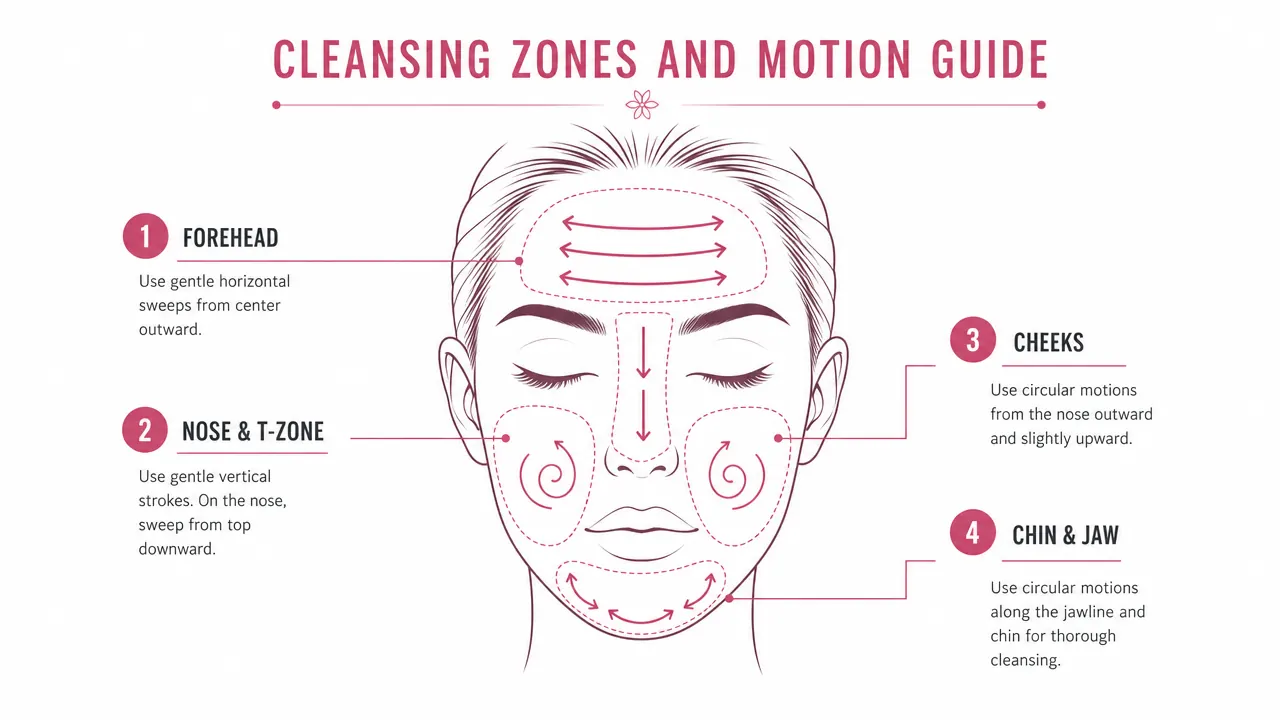
Divide your face into four zones: forehead, nose and T-zone, each cheek, and chin and jawline. Spend about 20 seconds per zone, using small circular motions and very light pressure. The vibration does the work. Pushing harder doesn't clean more effectively, it just irritates your skin. Think of it as guiding the brush rather than scrubbing with it.
Start with your forehead because that's usually the oiliest zone and benefits most from a thorough pass. Move to the nose and T-zone next, paying attention to the sides of your nose where product buildup tends to collect. Then sweep across each cheek in small circles, and finish with your chin and along your jaw. The whole process should take 60 to 90 seconds total. If you're going longer than two minutes, you're either being too slow or spending too long on one area.
Skip the under-eye area entirely. The skin there is the thinnest on your face and doesn't need or benefit from this kind of treatment. The silicone cleansing brush is for your four cleansing zones only, and staying within those boundaries is what keeps the routine safe for daily use.

Step 4: Rinse Thoroughly and Turn Off the Brush Before Removing It From Your Face
When you've finished all four zones, rinse your face with cool water. Cool water helps close pores after they've been loosened and cleaned, and it feels genuinely good after the warmth of the cleansing step. Rinse until all traces of cleanser are gone. Residue left on the skin is a common cause of breakouts that people incorrectly blame on the brush itself.
Before you pull the brush away from your face, turn it off first. Removing an active brush from your skin creates a drag that can cause micro-irritation, particularly around your nose and cheeks. It takes one second and it adds up over time. Then rinse the brush head under running water, give the silicone a gentle rub with your thumb to dislodge any cleanser, and set it bristle-side up to air dry. Do not cap it or toss it in a makeup bag while it's still wet.
Step 5: Follow With Your Regular Serum and Moisturizer Right Away
Here is the part that makes the silicone cleansing brush worth every cent: product absorption after a brush cleanse is noticeably better than after hand-washing. You've just removed the layer of buildup that was slowing down your serums and moisturizers. The minutes right after cleansing are when your skin is most receptive to active ingredients, and a freshly brushed face takes full advantage of that window.
Pat your face dry with a clean towel, leaving just a little dampness. Apply your toner or essence if you use one, then follow with your vitamin C serum or hyaluronic acid serum, then your moisturizer. You may find that you need slightly less product than usual because your skin is absorbing it more efficiently. That's normal, and it's exactly what the brush is designed to do.
If you use retinol at night, this step order matters even more. A clean surface without dead-cell buildup means your retinol reaches the skin cells it's meant to act on rather than sitting on top of debris. People who start using a facial cleansing brush consistently often find that their retinol results improve within a few weeks without changing the product itself. That's the compounding effect of genuinely clean skin.
How Often Should You Use a Silicone Cleansing Brush?
Once a day is the right answer for most people. Morning or evening, but not both. Evening is generally more effective because that's when you're removing sunscreen, makeup, and the day's accumulated pollution along with your regular cleanser. If you're wearing a full face of makeup, do a quick micellar-water first pass to break it down before reaching for the brush. The brush is a cleansing amplifier, not a makeup remover.
If your skin is sensitive or you're new to brush cleansing, start at three times per week and work up gradually. Give your skin two full weeks at each frequency before increasing. There is no benefit to using the brush twice a day, and doing so is one of the fastest ways to damage your moisture barrier, which shows up as tight, flaky, reactive skin that feels permanently irritated no matter what you put on it. If you're experiencing that right now, the most likely fix is using the brush less often, not switching products.
The vibration does the work. Pushing harder doesn't clean more effectively. Think of it as guiding the brush rather than scrubbing with it.
What Else Helps (Brush Maintenance and Common Mistakes)
The single most overlooked part of owning a facial cleansing brush is cleaning the device itself. Rinse the silicone head under running water after every use and let it air dry completely before storing it. Every two weeks, soak the head in a small bowl of warm water with a drop of gentle soap for five minutes, then rinse and dry. A dirty brush puts bacteria directly onto a freshly cleaned face with open pores, which is the opposite of what you're trying to accomplish.
Two other mistakes come up constantly. First, using the brush on broken skin, active acne, sunburn, or any compromised barrier. The brush is for intact skin only. If you have a breakout, work around it carefully, don't brush over it. Second, pressing down hard because you think more pressure means a deeper clean. It doesn't work that way. Light contact with consistent circular motion outperforms hard pressing every time, and it keeps your skin barrier intact for the long haul. Treat the brush like you'd treat a delicate fabric, gentle and methodical beats forceful every time.
The COSLUS brush also comes with six additional attachments designed for different skin types and concerns, including a firming massage head and a softer cleansing head built specifically for sensitive skin. If you're just getting started, stick with the standard silicone cleansing head for at least a month before experimenting with the others. Get the basic routine dialed in and let your skin adjust. Then explore. There's real value in those extra heads once you know what your skin responds to.
If your serums haven't been performing the way you'd expect, the problem might be what's in the way.
The COSLUS silicone facial cleansing brush removes the buildup that blocks absorption so your routine actually works. Waterproof, USB rechargeable, 4.3 stars from over 14,000 reviews.
Amazon Check Today's Price on Amazon →